5 Checks Before You Buy a Sapphire Crystal Watch
Sapphire crystal is synthetic aluminum oxide, engineered to rank 9 on the Mohs hardness scale, which makes it far more scratch-resistant than mineral glass (5 to 7) or acrylic (about 2). For most buyers, it is worth the extra cost if you want a watch face that stays clear for decades. The one trade-off: sapphire is brittle, and its high reflectivity means you should also check for an anti-reflective coating before you buy.
TL;DR:
- Sapphire crystal offers nearly scratch-proof durability but can chip or crack under sharp impacts, unlike mineral glass or acrylic.
- Anti-reflective coatings improve legibility, with double-sided coatings reducing glare but being softer and more prone to wear over time.
- Cutting and polishing sapphire requires specialized tools and more labor, contributing significantly to its higher cost compared to mineral or acrylic glass.
- Verifying a watch’s sapphire crystal involves checking the specification wording, crystal shape, thickness, warranty coverage, and replacement costs.
- Proper cleaning with water and a soft cloth preserves the AR coating, while aggressive cleaning can wear it down, revealing the underlying sapphire.
Table of Contents
- What Is a Sapphire Crystal Watch, and How Is It Made?
- Sapphire vs. Mineral Glass vs. Acrylic: Which Wins?
- Why Sapphire Costs More: Clarity, Coatings, and Cutting
- How Do You Verify a Watch Actually Has Sapphire Crystal?
- Caring for a Sapphire Crystal Without Damaging It
- Why Certain Brands Choose Sapphire for Select Designs
- See Sapphire Crystal in Action: The Atlantic Blue
- Sources
What Is a Sapphire Crystal Watch, and How Is It Made?
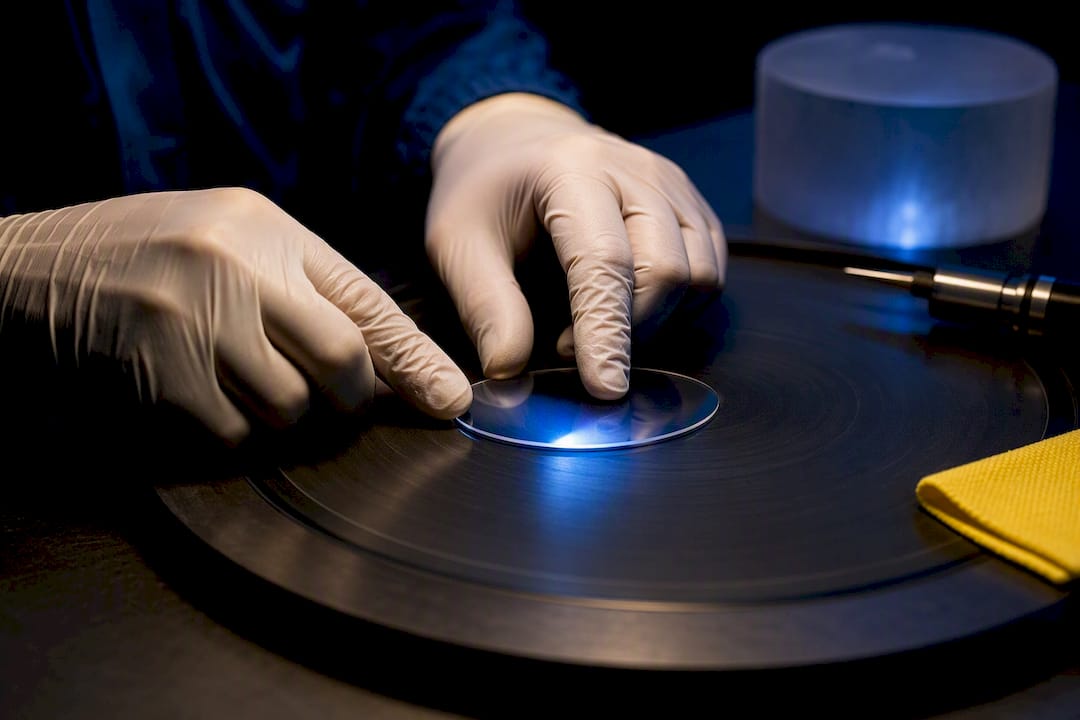
A sapphire crystal starts as a boule, a cylindrical block of lab-grown corundum crystallized under extreme heat and pressure. Manufacturers slice that boule into thin wafers, then grind and polish each one into the shape a watch case requires. The process explains why sapphire costs more than other crystal types.
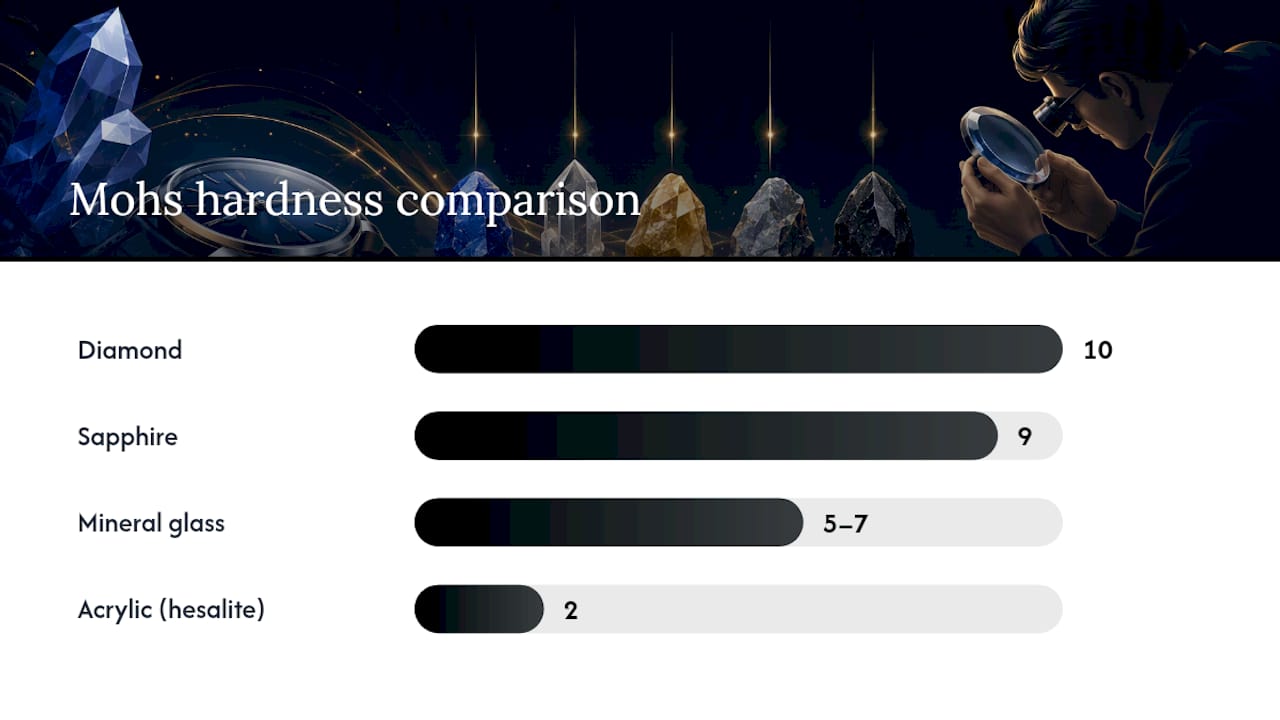
That Mohs hardness rating of 9 is not a marketing number. Only diamond, at 10, sits above it. Mineral glass, treated with heat or chemicals to add some scratch resistance, still lands at 5 to 7. Acrylic (also called plexiglass or hesalite) barely reaches 2, which is why a cheap acrylic watch face fogs up with fine scratches within a year of daily wear.
Watchmakers cut sapphire into three common profiles:
- Flat crystals sit low and resist edge chipping, common on dive and field watches.
- Domed crystals add a vintage look and reduce glare from certain angles, but they raise the impact risk at the edges.
- Box crystals stack height for a retro silhouette, often paired with beveled edges for extra strength.
Sapphire vs. Mineral Glass vs. Acrylic: Which Wins?
Sapphire wins on scratch resistance in almost every real-world scenario a watch owner faces, from keys in a pocket to a brush against a brick wall. Mineral glass holds up reasonably well for casual wear and costs far less to replace. Acrylic, oddly, is the toughest of the three when it comes to surviving a hard knock, because it flexes instead of cracking.
Mohs hardness comparison: Sapphire crystal rates 9, mineral glass rates 5 to 7, and acrylic rates roughly 2 on the Mohs scale.
That flexibility is also acrylic’s advantage in one specific case: heavy-impact tool watches. Divers and field-watch enthusiasts sometimes prefer acrylic because it absorbs shock rather than shattering, a point horology specialists at Monochrome note when comparing crystal types for rugged use.
Here is the trade-off worth remembering:
- Sapphire: nearly scratch-proof, but a sharp edge impact can chip or crack it outright.
- Mineral glass: scratches more easily, but minor scuffs can sometimes be buffed out with polish.
- Acrylic: scratches the easiest of the three, yet you can polish out surface marks at home with basic acrylic polish, and it rarely shatters.
Repairability follows the same logic in reverse. A scuffed acrylic crystal is a five-minute fix with a polishing cloth. A scratched sapphire crystal usually cannot be polished out at all, since the same hardness that resists scratches also resists the abrasives used to buff them. If sapphire cracks, replacement is the only real option.
Why Sapphire Costs More: Clarity, Coatings, and Cutting
Sapphire’s refractive properties give it a glasslike clarity that many owners notice immediately, especially under direct light. That same optical density has a downside: untreated sapphire reflects close to 8% of light at each surface, which can make a dial harder to read outdoors.
Anti-reflective coatings solve that problem. A quality AR coating cuts surface reflection to below 1%, dramatically improving legibility. Watchmakers generally apply it in one of two ways:
- Single-sided AR (inside only): the industry’s common compromise, protecting legibility while keeping the exterior surface fully hard and scratch-resistant.
- Double-sided AR: better glare reduction from every angle, but the outer coating is softer than raw sapphire and can show fine wear over years of use.
Pro Tip: If you wear your watch daily in strong sun, an inside-only AR coating is usually the safer long-term bet. It keeps the scratch-resistant sapphire surface fully exposed on the outside, where it takes the most abuse.
Manufacturing difficulty is the other reason sapphire adds cost. Cutting and polishing a material nearly as hard as diamond takes specialized tools and far more time than shaping mineral glass, a gap the watch retailer Ethos points to as the main driver behind sapphire’s price premium. At the extreme end of the category, some luxury brands even machine entire watch cases from solid sapphire, a process that can consume hundreds to thousands of hours of labor per piece.
How Do You Verify a Watch Actually Has Sapphire Crystal?
Retailers do not always make this obvious, and the wrong assumption can cost you real money on a watch that will scratch within a year. Work through these checks before you buy.
- Read the exact wording on the spec sheet. “Sapphire crystal” means solid synthetic sapphire. “Sapphire-coated” or plain “glass” usually means a mineral or acrylic base with a thin sapphire-like film, which behaves nothing like solid sapphire under real wear, a distinction Ethos flags as a common point of confusion for shoppers.
- Ask about AR coating placement. Single-sided, double-sided, or none each affect legibility and long-term wear differently.
- Check the crystal’s shape and thickness. Flat crystals resist edge chipping better than domed ones; thicker crystals (commonly 1.0mm to 2.0mm in replacement parts) generally hold up better against direct impact.
- Review the warranty language. Confirm whether crystal damage falls under coverage or counts as user damage excluded from service.
- Price in the replacement cost. A sapphire crystal replacement is a real expense to weigh against the years of scratch-free wear you get in return.
For a deeper technical breakdown of how these hardness numbers translate into everyday durability, our guide on scratch-resistant watch materials walks through the comparison in more detail.
Caring for a Sapphire Crystal Without Damaging It
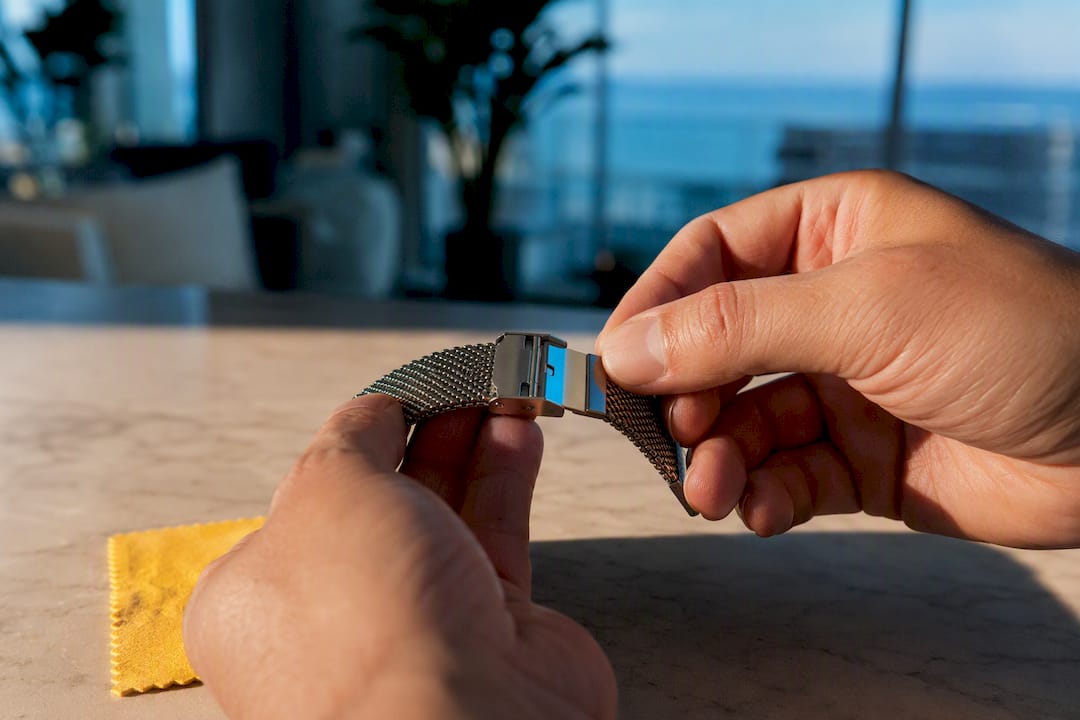
Sapphire itself is nearly indestructible against scratches, but the AR coating on top of it is not. Rubbing a dry cloth aggressively across the surface, or using an ammonia-based cleaner, can gradually wear down that coating faster than normal use would.
- Rinse with lukewarm water and a drop of mild soap, then dry with a soft microfiber cloth.
- Avoid paper towels and rough fabrics, which can leave micro-scratches on the AR layer even if the sapphire underneath stays untouched.
- If you see a hazy patch that will not wipe away, that is often coating wear, not a scratch on the sapphire itself.
- A genuine scratch on solid sapphire will resist buffing entirely, since nothing short of diamond abrasives can touch it.
Replacement costs vary by brand and crystal size, generally increasing with the diameter and thickness of the part, plus labor for reinstalling and resealing the case. Checking your warranty terms before an accident happens is the cheapest insurance you can buy.
Why Certain Brands Choose Sapphire for Select Designs
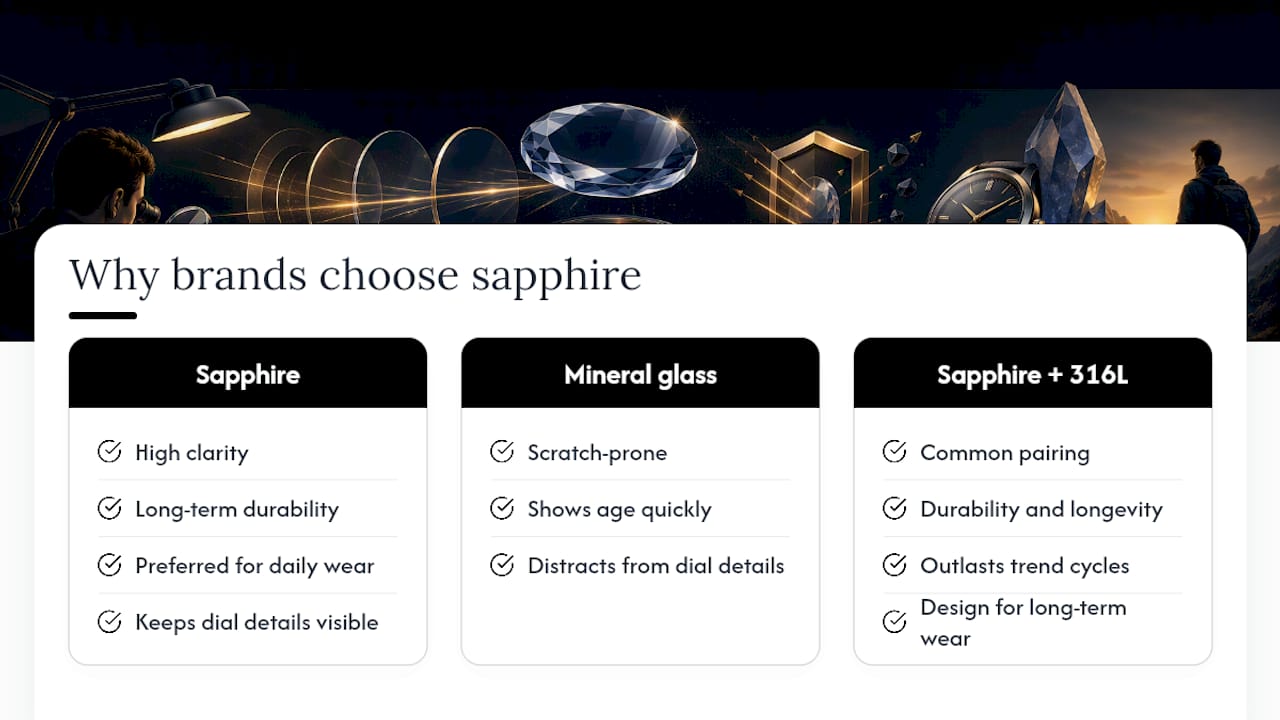
Some watches are designed for versatile daily wear in varied settings, where a scratch-prone crystal would show its age quickly. Sapphire provides the clarity and long-term durability often preferred in such designs: clean dials, minimal distraction, nothing standing between you and the details in the case design.
Pairing sapphire with a 316L stainless steel case is a common choice for durability and longevity in watch design. Both materials are built to outlast trend cycles, reflecting a design philosophy focused on long-term wear. For more on this pairing, see the breakdown of sapphire versus mineral glass covering material trade-offs from a watchmaker’s perspective.
— Mathias
See Sapphire Crystal in Action: The Atlantic Blue
Every checklist in this guide points toward one question: does the watch you are looking at actually deliver on sapphire’s promise, or just borrow the name? The Atlantic Blue Stainless Steel Automatic Watch is built around a genuine sapphire crystal set into a 316L stainless steel case designed for real daily wear, not just display-case photos.
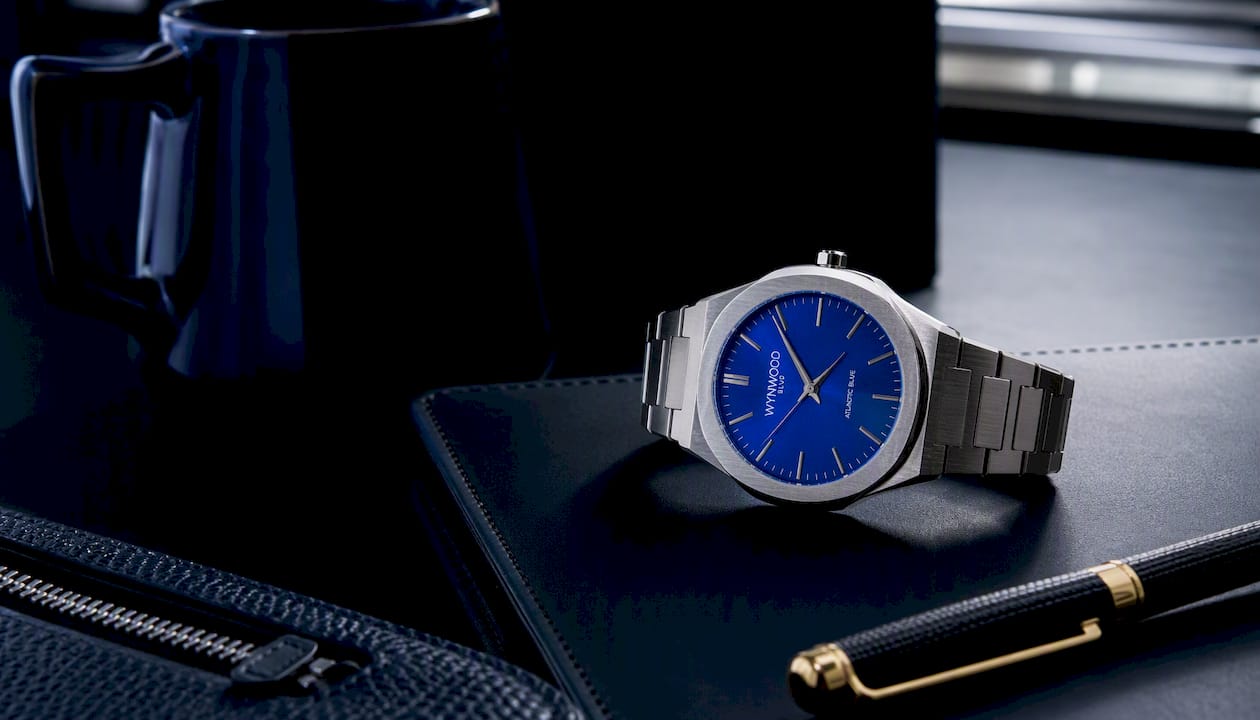
That combination checks every box from the buying guide above: solid sapphire (not a coated substitute), a case material chosen for long-term resilience, and water resistance that holds up against sun, salt air, and everyday knocks. If you want a closer look at the dial finish, coating, and full case specs, the Atlantic Blue product page lists the full details along with warranty and support information. For anyone who prefers to see craftsmanship and repair options in person, retail partners like Antonio Guzzo Fine Jewelry offer complementary services worth exploring alongside your purchase.
Sources
- A Comprehensive Guide to Watch Crystals - History, Types, Advantages, and Disadvantages
- Sapphire Crystal
- Sapphire Crystal: What is it & How is it used in Watch Making | Ethos
- Masar Sapphire Watch Glass Flat Round - Thickness 1.0mm
%20or%20acrylic%20(about%202).%20For%20most...)