Stainless Steel Jewelry for the Ocean: What You Need to Know
Yes, you can wear stainless steel jewelry in the ocean — but the grade and your aftercare routine matter more than most product descriptions let on. AISI 316L is the right choice for saltwater exposure. AISI 304 and 304L work for occasional splashes, but they carry more risk in prolonged seawater contact. Rinse with fresh water and dry thoroughly after every swim, and your pieces will hold up well.
Quick reference:
- Safe grade: AISI 316L (marine-grade, molybdenum-enhanced chloride resistance)
- Acceptable with caution: AISI 304 / 304L (fine for showers, higher risk in repeated ocean use)
- Design caveats: Avoid hollow parts, narrow crevices, and glued settings for ocean wear
- Aftercare: Rinse with fresh water immediately after leaving the water, then dry completely
- Brand example: Wynwoodblvd designs its stainless steel pieces with ocean-ready use in mind, drawing on coastal Miami living as the brand’s core identity
Table of Contents
- Why stainless steel resists seawater — and where it can still fail
- How saltwater attacks stainless steel: pitting, crevice, and galvanic corrosion
- How to choose stainless steel jewelry that stands up to the ocean
- Signs that a piece needs repair or replacement
- What corrosion studies say about 316L in seawater
- Key Takeaways
- The grade conversation most buyers skip
- Wynwoodblvd ocean-ready pieces worth knowing about
- Sources and further reading
Why stainless steel resists seawater — and where it can still fail
Stainless steel holds up in water because of a thin, self-healing chromium oxide layer on its surface. When chromium (at least 10.5% by weight in stainless steel) meets oxygen, it forms this passive film automatically. Scratch it, and it repairs itself — as long as oxygen is present. That self-healing property is what makes stainless steel resist water in everyday conditions.
The problem with seawater is chloride ions. They attack the passive layer at weak points, creating small pits. AISI 316L adds molybdenum to the alloy, which significantly improves resistance to chloride-driven pitting. AISI 304 and 304L contain no molybdenum, so they are more vulnerable when chloride exposure is sustained. The British Stainless Steel Association notes that even 316 types cannot be considered corrosion-proof in all seawater situations — design and fabrication quality are just as important as alloy grade.
Surface treatments add another layer of protection. PVD (Physical Vapor Deposition) coatings bond at the molecular level and outperform standard electroplating for long-term ocean wear. Electroplated finishes are thinner and more prone to micro-cracks that let saltwater reach the base metal underneath.
| Grade | Molybdenum | Ocean suitability | Best for |
|---|---|---|---|
| AISI 316L | Yes (2–3%) | Best uncoated option | Regular swimmers, beach jewelry |
| AISI 304L | No | Moderate | Occasional exposure, showers |
| AISI 304 | No | Lower | Everyday wear, avoid prolonged ocean use |
| AISI 420 | No | Poor | Not recommended for ocean wear |
Pro Tip: Look for “316L” or “surgical steel 316L” stamped or listed in the product spec. If a listing says only “stainless steel” with no grade, ask the seller directly before buying for ocean use.
How saltwater attacks stainless steel: pitting, crevice, and galvanic corrosion
Three corrosion types are most relevant for jewelry worn in the ocean.
Pitting corrosion starts when chloride ions break through the passive layer at a weak point, usually a surface defect or inclusion. The result is a small, localized pit that can deepen faster than it widens. On a polished chain or pendant, early pitting looks like tiny dull spots or rough patches that don’t respond to polishing.
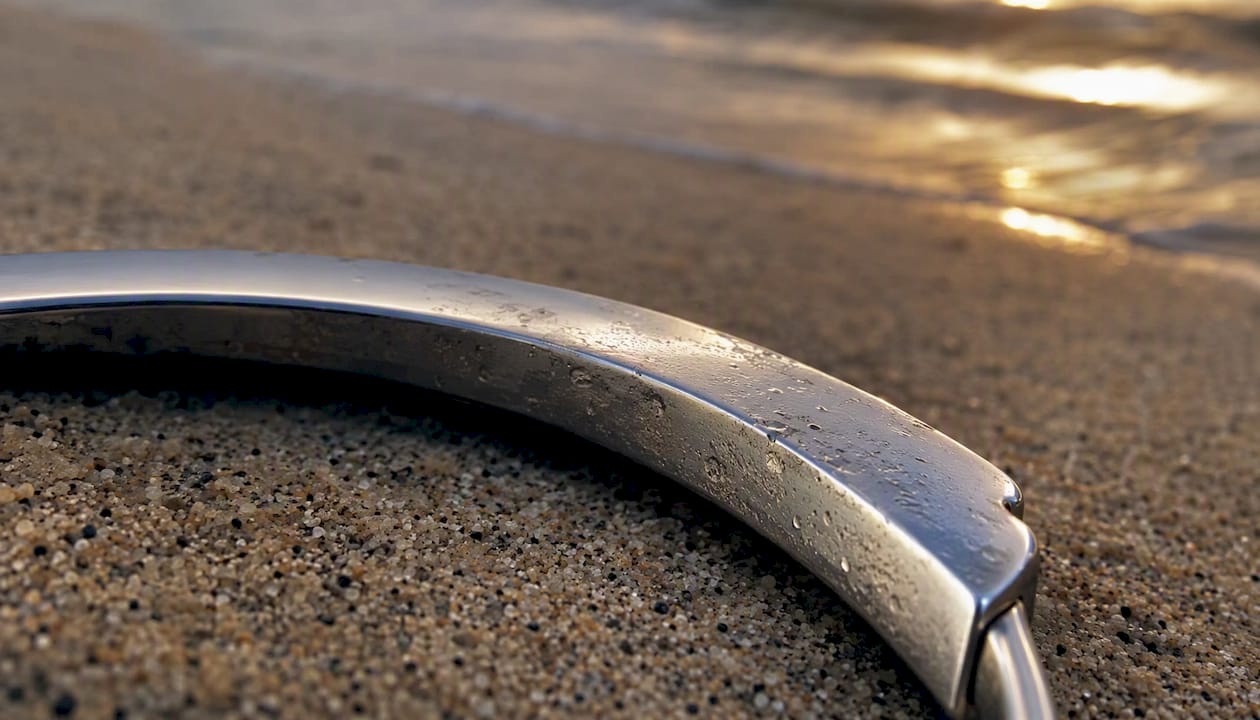
Crevice corrosion happens in tight gaps — between chain links, under a stone setting, inside a clasp mechanism. Saltwater gets trapped there, oxygen depletes, and the passive layer can’t repair itself. According to industry guidance on seawater best practices, avoiding designs with trapped pockets is one of the most effective ways to extend a piece’s life in marine environments.
Galvanic corrosion occurs when two different metals are in contact in an electrolyte (seawater qualifies). A stainless steel clasp paired with a brass or copper component will accelerate corrosion of the less noble metal. This is why all-stainless construction matters for ocean jewelry.
Plated pieces carry a hidden risk: the base metal beneath an electroplated coating is often brass or copper. Once the plating chips or cracks — which saltwater accelerates — corrosion of the base metal begins fast, and it can spread under the coating before you see it on the surface.
Visual cues to watch for:
- Tea-staining: a brownish discoloration on the surface, often the first visible sign
- Small dull pits, especially near clasps, links, or stone settings
- Rough or gritty texture where the surface was previously smooth
- Flaking or bubbling on plated pieces
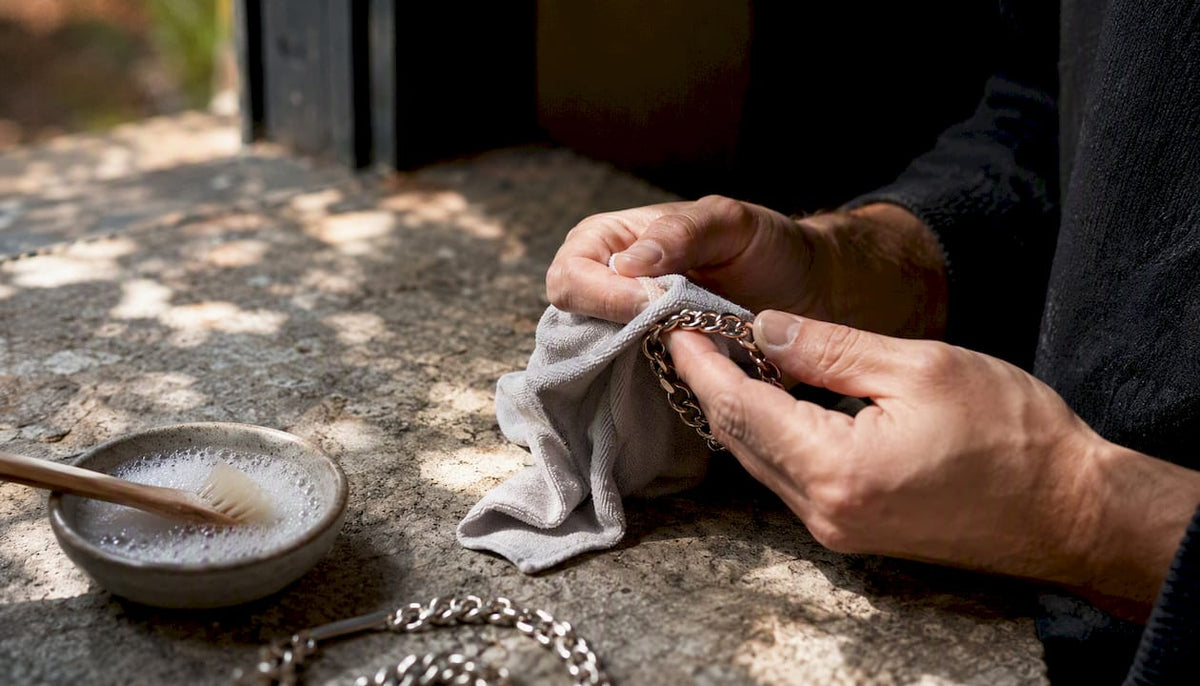
Pro Tip: After rinsing a chain, hold it up to light and flex it gently. If you see any white residue or feel grit between links, soak it in clean fresh water for 5 minutes and rinse again. Trapped salt is the main driver of crevice corrosion in chain jewelry.
How to choose stainless steel jewelry that stands up to the ocean
A few specific details separate a piece that handles ocean use from one that looks fine in the store but corrodes within a season.
Buying checklist:
- Grade is 316L (not just “stainless steel”)
- Solid construction, not hollow
- Welded links, not soldered (solder joints are often a different alloy)
- Clasps are all-stainless, with no brass or zinc components
- Settings are bezel-set or flush-set, not prong-set with open gaps
- Surface finish is PVD if coated, not standard electroplate
- No glued elements (adhesive fails in water and creates crevices)
What to ask the seller:
- What is the exact grade of stainless steel?
- Is any coating PVD or electroplate?
- Is there a warranty against tarnish or corrosion?
- What care instructions do you recommend for ocean use?
Red flags:
- “304 stainless” marketed as ocean-safe without qualification
- Visible seams on hollow pendants
- Mixed-metal clasps with no grade information
- “Waterproof” claims with no mention of aftercare
For a broader look at how 316L compares to other anti-tarnish jewelry options, the grade difference becomes especially clear when you compare long-term performance in salt air versus controlled indoor conditions.
Signs that a piece needs repair or replacement
Some corrosion is cosmetic. Some signals a structural problem. Here is how to tell the difference.
Replace or retire from ocean use when you see:
- Deep pits that catch a fingernail — the passive layer is compromised at depth
- Cracks near welds, solder joints, or clasp hinges
- Stones that have shifted, loosened, or fallen out (water infiltration has reached the setting)
- Persistent brown or orange discoloration that doesn’t respond to cleaning
- Flaking or bubbling on a plated surface (base metal corrosion is already underway)
Repair may be possible when:
- Surface tea-staining is light and the metal underneath is smooth
- A clasp mechanism is stiff but structurally intact
- A PVD coating shows minor wear at high-contact points but no base-metal exposure
A jeweler can re-passivate a 316L piece (a chemical treatment that restores the oxide layer) if the damage is surface-level. For plated pieces with flaking, re-plating is an option, but the underlying metal should be inspected first. If a piece has been used heavily in the ocean and shows multiple corrosion sites, retiring it from saltwater use is the practical call.
Warranty expectations vary by brand. Ask specifically whether corrosion from saltwater use is covered, and what documentation the brand requires. Most quality brands that market pieces as ocean-ready will stand behind normal swim use.
What corrosion studies say about 316L in seawater
The research consistently supports the grade hierarchy that consumer guides repeat. A comparative corrosion study ranked AISI stainless steels in seawater from worst to best: 420 < 304 < 304L < 316L. Seawater exposure tests found 316L showed the best uncoated corrosion resistance of the four grades tested.
The BSSA’s guidance adds an important qualifier: grade alone doesn’t guarantee performance. Weld quality, surface finish, and design (minimizing crevices) all affect how long a piece holds up. A poorly finished 316L piece can underperform a well-finished 304L piece in some conditions.
Pollutants matter too. The Applied Sciences research on sulfide corrosion in seawater showed that even 316L’s resistance drops significantly when sulfide ions are present, which is relevant for anyone swimming near harbors, estuaries, or industrialized coastlines.
| Factor | Effect on 316L | Practical action |
|---|---|---|
| Chloride concentration | Increases pitting risk | Rinse immediately after ocean exposure |
| Temperature | Accelerates corrosion rate | Avoid hot tub use with plated pieces |
| Sulfide pollutants | Reduces pitting resistance significantly | Extra rinse care near harbors or estuaries |
| Stagnant trapped water | Prevents passive layer self-healing | Choose open designs; flush links after swimming |
| Surface finish quality | Determines passive layer integrity | Buy from brands that specify finishing standards |
The practical takeaway from the research: the rinse-and-dry routine isn’t just a marketing recommendation. It directly preserves the passive chromium oxide layer by removing chlorides before they can concentrate and initiate pitting.
Key Takeaways
AISI 316L is the only stainless steel grade you should choose for regular ocean jewelry use, and a freshwater rinse plus full dry after every swim is the single most effective care step.
| Point | Details |
|---|---|
| Choose 316L for ocean use | AISI 316L’s molybdenum content gives it the best uncoated chloride resistance of common jewelry grades. |
| Design details matter | Solid construction, welded links, and no crevices or glued settings reduce corrosion risk significantly. |
| Rinse and dry every time | Removing chlorides immediately after ocean exposure preserves the passive layer and prevents pitting. |
| Watch for early warning signs | Tea-staining, rough spots near clasps, and flaking on plated pieces signal corrosion before it becomes structural. |
| Wynwoodblvd for ocean-ready style | Wynwoodblvd designs stainless steel watches and jewelry for coastal wear, with pieces built for Miami’s ocean environment. |
The grade conversation most buyers skip
Most people shopping for ocean jewelry focus on style and price. Grade is an afterthought, if it comes up at all. That’s a mistake worth addressing directly.
The difference between 304 and 316L isn’t marketing language. It’s a measurable difference in how the alloy responds to chloride ions at a chemical level. Molybdenum changes the electrochemical behavior of the passive layer in ways that matter specifically in saltwater. A piece labeled “stainless steel” with no grade specified is almost certainly 304, because 316L costs more and sellers who use it tend to say so.
What I’d push back on is the idea that 316L is “waterproof.” It isn’t. It’s corrosion-resistant under normal conditions, which is a different claim. The research is clear that even 316L develops pitting under sustained chloride exposure, especially in stagnant conditions or near pollutants. The grade buys you time and tolerance. Your aftercare routine is what actually extends a piece’s life.
The other thing buyers underestimate is design. A beautifully finished 316L chain with tight, complex links can corrode faster than a simpler 304 piece with open, easy-to-rinse construction. The passive layer can’t self-heal in an oxygen-depleted crevice, regardless of grade. So when you’re choosing a piece for ocean use, look at the construction as carefully as the alloy.
Wynwoodblvd ocean-ready pieces worth knowing about
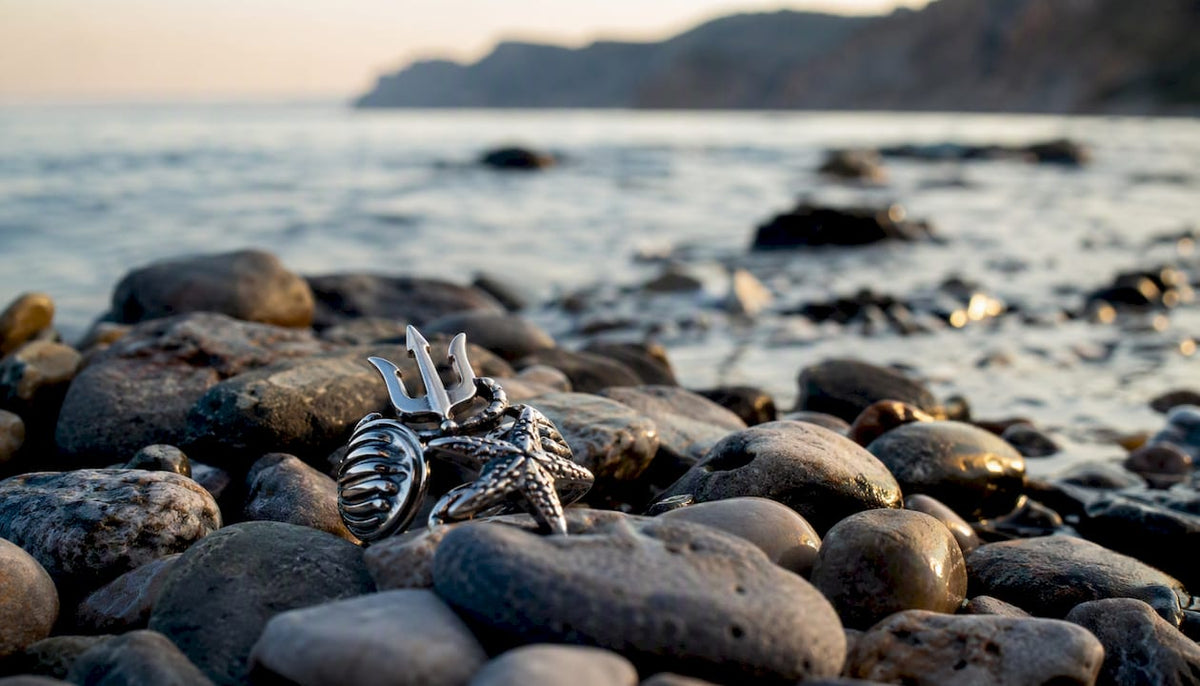
Wynwoodblvd builds its stainless steel watches and jewelry around coastal living — specifically Miami’s beaches, the Florida Keys, and the open Atlantic. That’s not just a design story. It shapes the material choices and construction standards behind each piece.
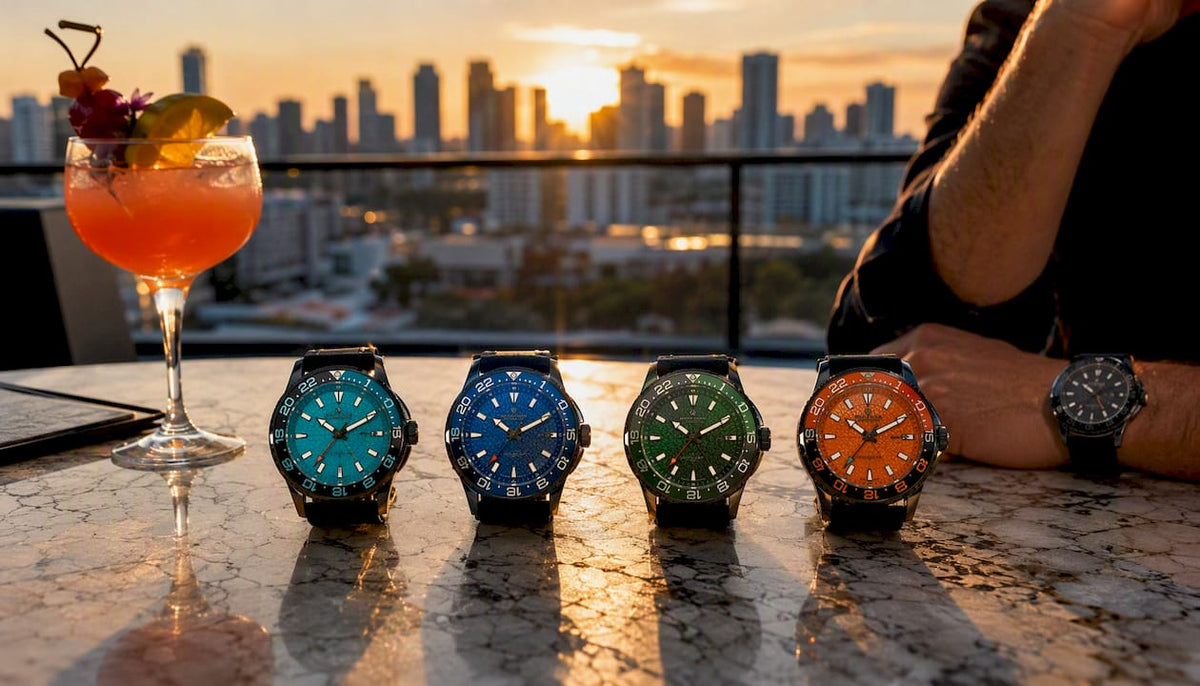
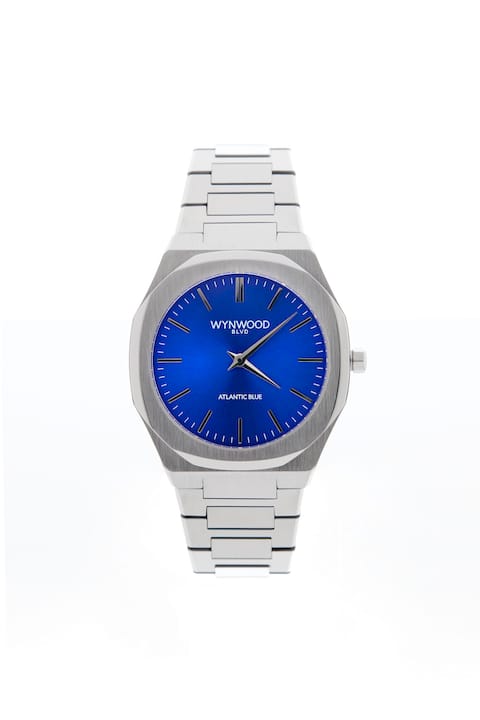
The Atlantic Blue Automatic Watch is a direct example: a stainless steel automatic with a dial color drawn from open-water blues, built for the kind of person who doesn’t take their watch off at the beach. The Everglades Green and Sunset Orange models follow the same construction approach with distinct coastal color stories.
For jewelry, the necklaces collection covers pendants and chains suited to beach and swim use. Check the product pages for grade and care details, and reach out directly if you want specifics on construction before buying.
Sources and further reading
- Selection of 316, 304 and 303 types of stainless steels for seawater applications — British Stainless Steel Association
- Corrosion Behavior of Stainless Steel in Seawater in the Presence of Sulfide
- Comparative study of corrosion behavior of AISI stainless steels in seawater (IOPscience)
- Stainless Steel in Seawater: Grades, Corrosion & Best Practices
- Is Stainless Steel Waterproof? The Complete Truth for 2026
- What Jewelry Can You Wear in the Pool & Ocean