Avoid Regret: Watch Buying That Puts Use Case and Cost First
Before you look at a single dial, decide how you’ll actually wear the watch and set one total budget that covers the purchase, tax, and future servicing. Every other decision, movement type, case size, style category, buying channel, follow from those two answers. This guide walks through the criteria that matter: fit, materials, service costs, and where to buy with real buyer protection.
TL;DR:
- Choose a budget that covers purchase, tax, and service costs to avoid unnecessary expenses over the watch’s lifespan.
- Prioritize your intended use and environment to identify essential features like water resistance, size, and durability before selecting a dial.
- Opt for a movable that matches your lifestyle, with quartz for reliability or automatic for mechanical appeal, identified easily by wrist sound or ticking.
- Select a style that aligns with your daily routine, ensuring the watch’s size, shape, and features support comfortable, everyday wear.
- Budget at least 200 to 500 dollars for a reliable automatic, and always include future service costs in your overall watch ownership plan.
Table of Contents
- What Should You Do Before Starting a Watch Buying Guide?
- Quartz, Automatic, or Mechanical: Which Movement Fits You?
- Which Watch Style Fits Your Life: Dress, Diver, Field, Pilot, Chronograph, or GMT?
- How Do You Find the Right Watch Size and Fit?
- What Budget Tier Gets You a Real Automatic Watch?
- Which Materials and Finishing Details Signal Real Quality?
- What Should You Check Before You Buy a Watch In Person?
- What Should You Budget for Watch Maintenance and Service?
- Design-First Buying Advice
- How Some Watches Match This Buying Checklist
- Selected Reading and Tools
- Sources
What Should You Do Before Starting a Watch Buying Guide?
Most buyer’s remorse traces back to one mistake: shopping the dial before defining the job. Experts who study this consistently point to the same fix, understanding your actual “why” before you compare a single spec. A watch bought for gym workouts and worn to weddings will disappoint you twice.
Start by matching your routine to physical requirements. A swimmer needs at least 100 meters of water resistance and a screw-down crown. Someone in suits five days a week needs a case under 11mm thick so it slides under a cuff. Someone hiking or working outdoors needs high-contrast markers and a bit of luminescence, not a minimalist dial that vanishes in bright sun.
Consider three practical filters:
- Will this be your only watch, or the first of a small rotation?
- How often will you actually wear it, weekly, or just on occasion?
- Does your daily environment involve water, impact, or extreme temperature swings?
If you’re buying one watch to do everything, cost-per-wear thinking becomes useful: a $400 watch worn three times a week for five years costs far less per wear than a $150 watch that sits in a drawer after two months. Answer those three questions honestly and you’ll already have eliminated half the market.
Quartz, Automatic, or Mechanical: Which Movement Fits You?
The movement inside the case determines how the watch behaves day to day, and it’s the single biggest factor beginners underestimate. Quartz movements run on a battery and a vibrating crystal. They’re accurate to within seconds a month, need almost no attention, and cost less to buy and maintain. Automatic movements wind themselves from wrist motion and appeal to people who like mechanical engineering, but they drift a few seconds a day and need periodic servicing. Manual mechanical movements work the same way minus the self-winding rotor, so you wind them by hand daily.
Here’s how they stack up:
- Quartz: highly accurate, low maintenance, battery swap every 1–2 years, best for daily reliability.
- Automatic: no battery, visible mechanical craftsmanship, needs winding if unworn for more than a day or two, service every several years.
- Manual mechanical: purest mechanical experience, requires daily winding discipline, similar service needs to automatics.
If accuracy and low fuss matter most, choose quartz. If you want the visual and mechanical appeal of a moving rotor, an automatic is the better fit, and it’s the category most enthusiasts eventually gravitate toward.
Pro Tip: Hold the watch up to your ear. A quartz movement ticks in distinct one-second beats; an automatic hums with a smoother, faster sweep. That’s the fastest way to identify a movement type without opening the case back.
Which Watch Style Fits Your Life: Dress, Diver, Field, Pilot, Chronograph, or GMT?
Style categories exist because each one solves a specific wearing problem, not because one looks better than another on Instagram.
- Dress watches run thin, simple, and understated, ideal for suits and formal settings where a bulky sport watch looks out of place.
- Divers bring water resistance of 100 meters or more, a rotating bezel, and bold markers, built for swimming, diving, or just everyday durability.
- Field watches favor legibility and toughness, with clean dials and rugged cases suited to outdoor work or travel.
- Pilot watches use oversized cases and crowns designed for glove use, with high-contrast dials borrowed from aviation cockpits.
- Chronographs add stopwatch function through extra sub-dials and pushers, useful if you actually time things, less useful if you don’t.
- GMT watches track a second time zone with an extra hand and bezel, built specifically for frequent travelers.
Most people don’t need six watches. A diver with a clean dial and a bracelet that swaps easily to leather covers casual and semi-formal territory at once. When style and function pull in different directions, function should usually win, a beautiful watch that fights your lifestyle every day becomes a watch you stop wearing.
How Do You Find the Right Watch Size and Fit?
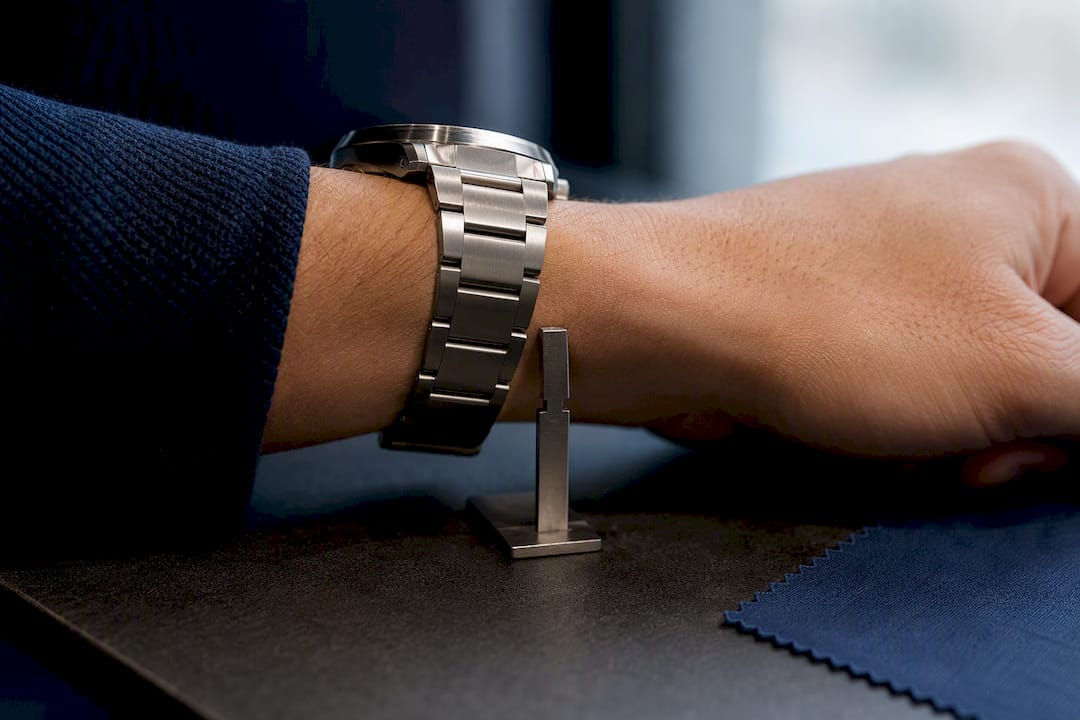
Case diameter gets all the attention, but lug-to-lug distance, the length from tip to tip across your wrist, often matters more for comfort. A 40mm watch with long lugs can wear larger than a 42mm watch with a compact case. Measure your wrist circumference with a tape or a strip of paper: under 6.5 inches generally suits 36 to 40mm cases, 6.5 to 7.5 inches suits 40 to 42mm, and above 7.5 inches can comfortably carry 42mm and up.
Thickness matters just as much for daily comfort, especially under a shirt cuff. A watch can wear the right diameter and still feel clumsy if it’s over 13mm thick.
- Check that lugs don’t overhang your wrist edge, that’s the most common fit mistake.
- Try both a bracelet and a strap version if available; bracelets run cooler in summer, straps flex better for smaller wrists.
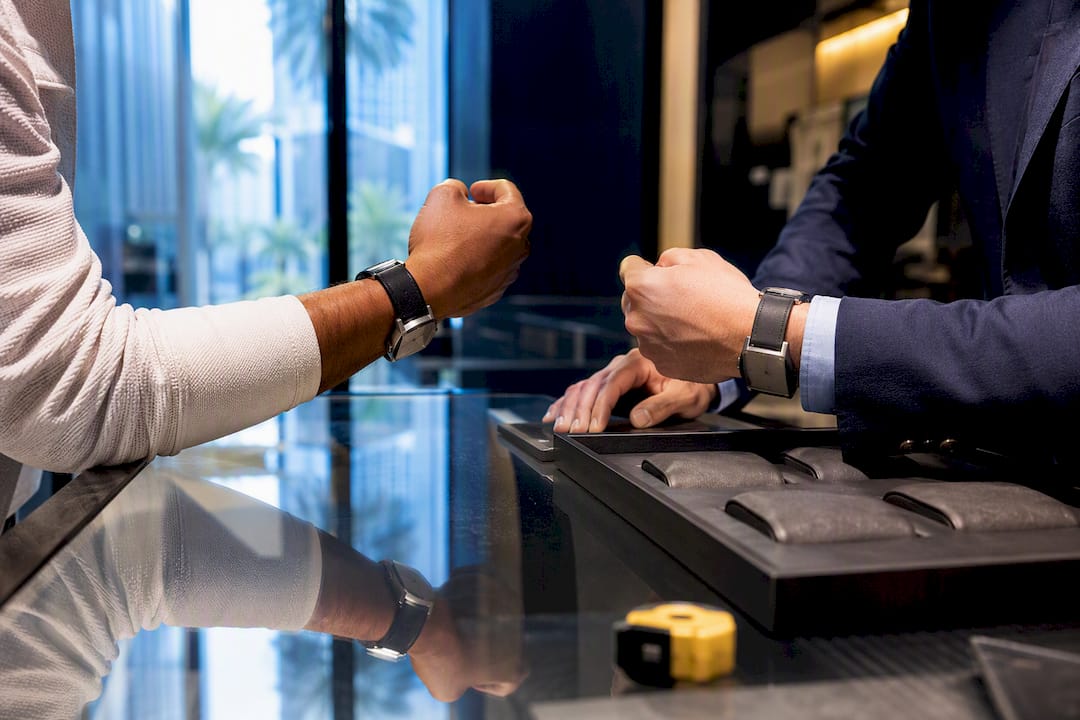
- Ask to try the watch on before buying, a proper size guide can narrow the range, but nothing replaces trying it on.
Pro Tip: Snap a photo of the watch on your wrist next to a coin for scale. Sizing charts help, but seeing the real proportions on your own wrist prevents the most common online-buying mistake.
What Budget Tier Gets You a Real Automatic Watch?
Price tiers roughly track to build quality, movement type, and finishing, but the jump in value isn’t linear. For a first automatic, the $200 to $500 range is a genuine sweet spot. It offers real Swiss or Japanese automatic movements, solid stainless steel cases, and finishing that holds up over years of wear. Under $200 is a sensible test tier for quartz or your first automatic if you’re not ready to commit further.
Above $1,000, you start paying more for brand heritage, in-house movements, and finishing refinement than for a dramatic jump in daily function. That’s not a bad trade if brand story matters to you, but understand what you’re actually paying for.
Whatever tier you land in, budget for the full cost of ownership, not just the sticker price.
The real cost of a watch is rarely the price tag. Experts recommend building an all-inclusive budget that covers sales tax and a first service interval years down the line, because most watches function as consumption purchases, not guaranteed investments.
Buying channel matters just as much as price tier:
- Authorized dealers offer full manufacturer warranty and peace of mind, at full retail price.
- Grey market dealers sell genuine watches at a discount, typically without the manufacturer warranty.
- Pre-owned platforms can deliver strong value, but only when you use buyer protection and authentication services, escrow-backed marketplaces reduce your risk of ending up with a damaged or “franken” watch built from mismatched parts.
Which Materials and Finishing Details Signal Real Quality?
Specs on a listing page can mislead you, but a few material choices consistently separate durable watches from disposable ones. 316L stainless steel resists corrosion and holds finishing better than cheaper steel grades, it’s the standard for a reason. Sapphire crystal resists scratches far better than mineral glass, so a coffee-shop counter or a rough jacket pocket won’t leave permanent marks on the face. A ceramic bezel insert holds color and resists scratching in ways aluminum inserts can’t match over years of daily wear.
Finishing tells you as much as the spec sheet. Look for these cues:
- Crisp transitions between brushed and polished surfaces, blurry or inconsistent finishing signals a rushed manufacturing process.
- Sharp, clean lug edges with no visible casting seams or rough spots.
- Solid end links where the bracelet meets the case, hollow or loose-fitting end links are a common corner-cut.
- Even, aligned printing on the dial, crooked text or markers is a reliable red flag on any watch regardless of price.
If a listing photo can’t show you sharp macro detail on the case edges and dial printing, treat that as a warning sign rather than a coincidence. A primer on 316L stainless steel construction is worth reading before you commit to any case material claim.
What Should You Check Before You Buy a Watch In Person?
A hands-on inspection catches problems no listing photo will show you. Work through this sequence whether you’re standing at a dealer counter or meeting a private seller for a pre-owned watch.
- Wind the crown gently, it should feel smooth with no grinding, and screw-down crowns should thread cleanly.
- Rotate the bezel if it has one, it should click firmly with no play or slippage between positions.
- Check bracelet or strap fit against your wrist, looking for gaps, pinching, or lugs that overhang the edge.
- Inspect the case back and crystal edges for scratches, gaps, or evidence of prior repair work.
- For automatics, listen and feel for a smooth, steady hum, not a rattle or an inconsistent tick.
For pre-owned mechanical watches specifically, ask the seller to run the movement on a timegrapher if one is available. Reading rate, beat error, and amplitude takes only a few minutes and tells you whether the movement needs service soon, information that should directly affect the price you’re willing to pay.
Pro Tip: Always ask a pre-owned seller for the original box, papers, and service history. A seller who can’t produce any documentation isn’t automatically dishonest, but it should lower your offer and raise your scrutiny of the case back and movement.
What Should You Budget for Watch Maintenance and Service?
Ownership costs don’t stop at the register, and skipping this math is how enthusiasts end up with an expensive drawer decoration. Quartz watches need a battery swap roughly every one to two years, a low-cost, low-effort task. Automatic and mechanical watches need fuller servicing every three to five years to keep lubrication and timing accurate.
- Independent watchmakers typically charge $200 to $400 for basic service on a common ETA or Sellita movement.
- Manufacturer service centers usually cost more than independent shops, sometimes significantly, especially once a warranty has expired.
- Out-of-warranty service is fully your responsibility, so factor a service fund into your original budget rather than treating it as a surprise years later.
A cheap $30 timegrapher app or device lets you spot-check rate and amplitude at home between professional services, a genuinely useful habit for anyone who owns more than one mechanical watch. Keeping a simple service log, dates, costs, and what was done, pays off the day you decide to sell or trade the watch.
Design-First Buying Advice
Every design decision starts with the same question this guide asks readers to answer first: how will this actually get worn? Watches often draw inspiration from Miami, Key West, and the Everglades, but the story only works if the watch survives daily use, poolside, on a boat, or under a blazer cuff at dinner.
That’s why some watches are built around 316L stainless steel cases, automatic movements, and proportions sized for real wrists rather than photo-ready oversizing. A watch loaded with heritage language but poor lug-to-lug fit fails the only test that matters: whether you reach for it tomorrow morning. Buy for your life first, and let the story on the dial be a bonus, not the whole pitch.
— Mathias
How Some Watches Match This Buying Checklist
Everything in this guide, movement, sizing, materials, buying channel, points toward one practical goal: a watch you’ll actually wear for years. Some collections are built around those exact priorities instead of chasing brand mythology.
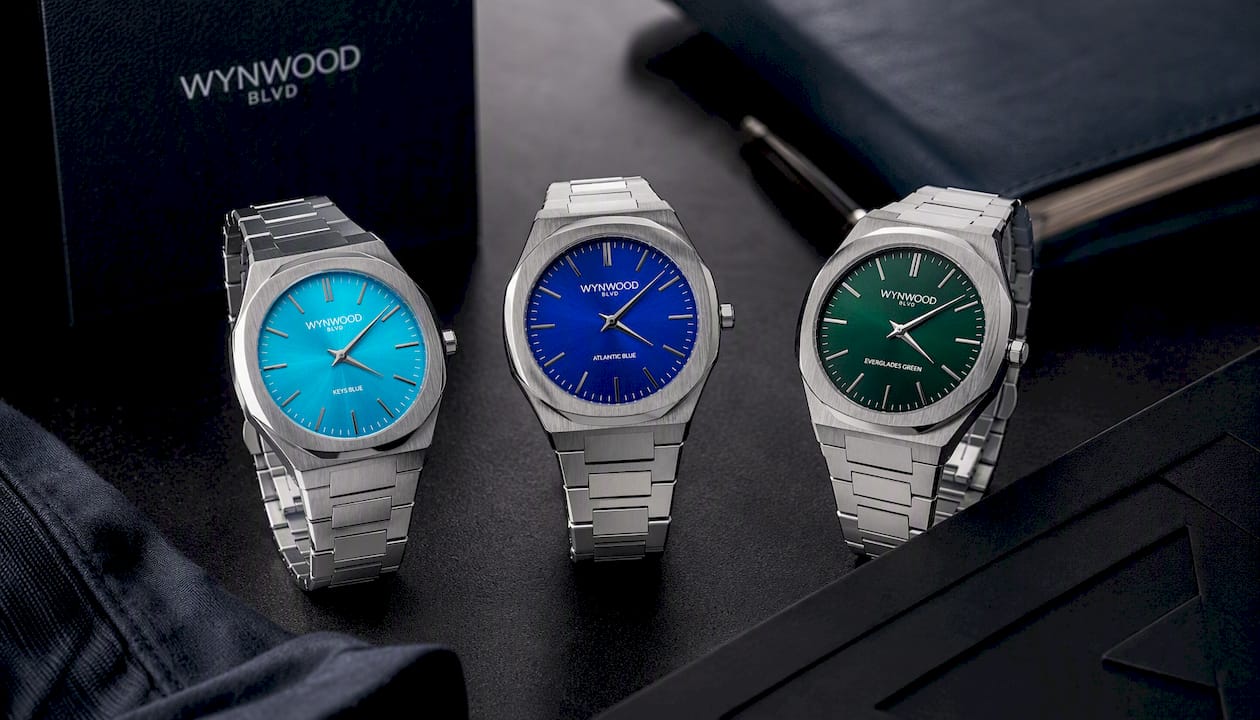
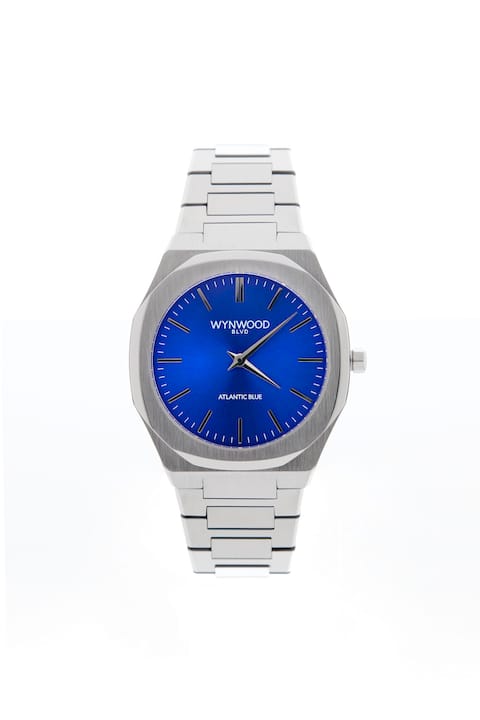
The Keys Blue Miami Inspired Watch runs a genuine automatic movement in a 40mm 316L stainless steel case, sitting right in the sweet spot this guide recommends for a first serious watch. The Atlantic Blue Stainless Steel Automatic Watch pairs that same sizing logic with a dial finish built for daily versatility, dress shirt one day, boat deck the next. The Everglades Green Miami Inspired Watch rounds out the lineup for buyers who want a bolder color story without sacrificing the fit and material standards covered above.
Measure your wrist, check the lug-to-lug specs on each product page, and compare them against your own numbers before deciding. Browse the full catalog at Wynwoodblvd and see which dial matches how you actually plan to wear it.
Selected Reading and Tools
- First-watch buying guide, Loupe, on pre-owned buyer protection and escrow platforms.
- The Ultimate Watch Buying Guide, The Calibrated Wrist, on defining use case before buying.
- How to Buy Your First Luxury Watch, Escapement, on timegrapher basics and service costs.
- Cost-per-wear formula, Fora Leonara, on valuing purchases over time worn.
Sources
- How to buy your first watch: first-watch buying guide
- The Ultimate Watch Buying Guide: How to Choose the Right Watch
- How to buy a watch, advice from experts who learned the hard way
- How to Buy Your First Watch