Watch Water Resistance: What Each Rating Lets You Do
Your watch’s water resistance rating is a static lab pressure result, not a promise about real-world depth. Here is what that means in practice:
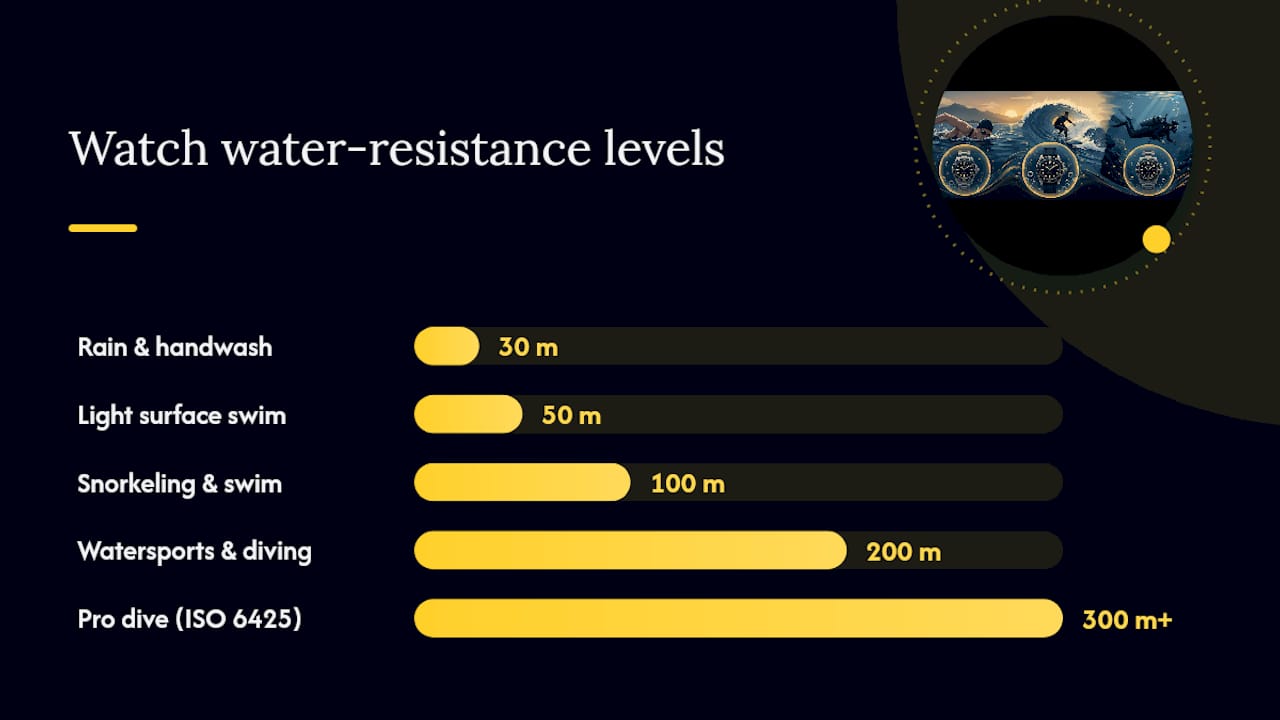
- 30m / 3 ATM: Splash and rain only. Not suitable for swimming or showers.
- 50m / 5 ATM: Light swimming in calm water. Skip the lap pool and the dive.
- 100m / 10 ATM: Suitable for recreational swimming and snorkeling; generally considered the minimum for regular water contact.
- 200m / 20 ATM: Suitable for recreational diving and watersports.
- 300m+ / ISO 6425: Intended for professional and saturation diving.
One thing to keep in mind: seals age. A watch rated 100m when new may not hold that rating after two years of regular use without a pressure test.
Key Takeaways
Watch water resistance is a static lab pressure rating, not a depth guarantee, and 100m is the practical minimum for anyone who swims regularly.
| Point | Details |
|---|---|
| Ratings are lab results | Static pressure tests do not replicate dynamic real-world forces like swimming or jumping into water. |
| 100m for swimming | 100m / 10 ATM is the sensible minimum for recreational swimming; 30m and 50m cover splashes only. |
| Seals age and degrade | Pressure-test every 1–2 years with regular water use, and always after any case opening. |
| Avoid heat and chemicals | Hot showers, chlorine, salt, and sunscreen accelerate gasket wear regardless of your rating. |
| Wynwoodblvd for coastal wear | Wynwoodblvd stainless steel automatic watches are built with sealed crowns and clear water-resistance ratings for everyday coastal use. |
Table of Contents
- How does watch water resistance actually work?
- What can you actually do with each water-resistance rating?
- Common myths about watch water resistance
- Where to find your watch’s water-resistance marking
- How to keep your watch water-resistant over time
- What does a professional water-resistance test actually involve?
- What to do if water gets inside your watch
- Which water-resistance rating do you actually need?
- A practical note from Wynwoodblvd on everyday water resistance
- Wynwoodblvd watches built for coastal everyday wear
- Sources
How does watch water resistance actually work?
The number on your caseback comes from a static pressure test conducted in a controlled lab environment, using still water or dry air pressure. It does not replicate what happens when you jump into a pool, wave-surf, or press a button underwater.
ATM stands for atmosphere, and 1 ATM equals roughly 10 meters (33 feet) of static water pressure. So a watch marked 5 ATM has been tested to the equivalent of 50 meters of still water pressure. Bar and ATM are effectively interchangeable for watch purposes.
The gap between lab and real life is where most water damage happens. When you move your arm through water, the dynamic force on the case can be several times higher than the static equivalent. Jumping into water, pressing a crown button mid-swim, or wearing the watch in a hot shower all create pressure spikes the rating was never designed to absorb. Temperature matters too: heat softens gaskets and expands metal, which can briefly break the seal even on a well-rated watch.
What can you actually do with each water-resistance rating?
The table below maps common ratings to safe activities. Use it as a quick reference before your next swim or dive.
| Rating | ATM / Bar | Safe Activities | Avoid |
|---|---|---|---|
| WR / 30m | 3 ATM | Rain, hand washing, accidental splashes | Swimming, showering, any submersion |
| 50m | 5 ATM | Light surface swimming, brief pool contact | Lap swimming, diving, watersports |
| 100m | 10 ATM | Recreational swimming, snorkeling | Scuba diving |
| 200m | 20 ATM | Watersports, recreational diving | Saturation diving |
| 300m+ | 30 ATM+ | Professional diving (with ISO 6425 certification) | N/A for most users |
A few things worth noting alongside the table:
- 30m does not mean 30 meters of swimming. That rating covers static pressure only. In practice, it means rain and a quick hand rinse, nothing more. The 30m label is one of the most misread marks in watchmaking.
- Watches rated for 100m typically feature screw-down crowns and reinforced casebacks, offering stronger construction than those rated 50m and below, making them suitable for swimming.
- 50m sits in a gray zone. It covers occasional water exposure but sits at the borderline for regular swimming. If you swim more than once a week, go to 100m.
- ISO 6425 matters for diving. A 200m rating without ISO 6425 certification is not the same as a certified dive instrument. ISO 6425 requires testing at 125% of rated depth, plus legibility, shock, and magnetic resistance checks.
Common myths about watch water resistance
Getting this wrong is expensive. These are the misunderstandings that send watches to the repair bench most often.
Myth: “Water resistant” and “waterproof” mean the same thing. They do not. “Waterproof” is not an appropriate or reliable consumer claim for watches, and regulators have pushed back on its use. Every watch sold today uses “water resistant” because no watch is unconditionally impervious to water under all conditions.
Myth: My 30m watch is fine for a quick swim. False. 30m is a static lab result. The dynamic pressure from swimming easily exceeds what that rating covers.
Myth: A higher rating means I can press buttons underwater. Wrong. Pushing a crown or chronograph pusher underwater forces water past the seal at the button’s entry point, regardless of the overall rating. Unless the manufacturer explicitly states button use is safe underwater, do not do it.
Myth: Hot showers are fine if my watch is rated 100m. Heat and soap are two of the fastest ways to degrade gaskets. Even higher-rated watches should stay out of hot showers because heat softens the rubber seals and soap strips lubricants from the gasket material.
Myth: My rating is permanent. Gaskets dry out, crack, and compress over time. Chlorine, salt water, sunscreen, and heat all accelerate that process. A watch that passed its factory test may not pass the same test two years later without a service.
Where to find your watch’s water-resistance marking
You do not need to guess. Check these places in order:
- Caseback: The most common location. Look for engravings like “Water Resistant 100m,” “WR 10 ATM,” or just “Water Resistant” with no number.
- Dial: Some watches print the rating on the dial face, usually near the 6 o’clock position.
- Owner’s manual: The definitive source for your specific model. If the caseback marking is worn or ambiguous, the manual resolves it.
- Manufacturer’s product page: Search your model number on the brand’s website. The spec sheet will list the official rating.
Abbreviation quick guide:
- WR = Water Resistant
- ATM = Atmospheres (1 ATM ≈ 10m)
- Bar = same as ATM for watch purposes
- m / ft = meters / feet of static test pressure
If your watch says only “Water Resistant” with no number, treat it as 30m equivalent and keep it away from anything beyond light splashes. Consult the manual or contact the manufacturer to confirm the actual rating before exposing it to more.
How to keep your watch water-resistant over time
Maintenance is where most people lose ground. The rating you bought is only as good as the seals behind it.
Daily habits:
- Rinse the watch with fresh water after salt water or pool exposure. Chlorine and salt both degrade rubber gaskets.
- Keep the crown pushed in or screwed down before any water contact. An unscrewed crown is an open door.
- Avoid hot showers, saunas, and steam rooms. Heat is harder on seals than cold water.
- Do not press buttons underwater unless your manual explicitly permits it.
- Pat the watch dry after water exposure rather than rubbing, which can work moisture into small gaps.
Service intervals:
- Pressure-test every 1–2 years if you use the watch regularly in water.
- Always get a pressure test after a battery change, strap swap that required case opening, or any watchmaker service that involved opening the case.
- Seals degrade with time and exposure, so even a watch that has not been in water needs periodic inspection if you plan to start using it near water again.
What speeds up seal failure:
- Chlorinated pool water
- Salt water without rinsing
- Sunscreen and chemical sprays applied near the crown
- Detergents and soaps
- Repeated heat exposure (hot tubs, saunas, hot showers)
Pro Tip: When you bring your watch in for a pressure test, ask the watchmaker to inspect the crown gasket specifically. That is the seal most likely to fail first on a watch used regularly near water.
If you wear your watch in the water and also want to protect your wrist from irritation, the watch rash prevention guide covers strap materials and drying habits that help.
What does a professional water-resistance test actually involve?
A watchmaker’s pressure test is more than a quick dunk. Here is what a standard service looks like:
- Visual inspection. The watchmaker checks the crown, crystal, caseback, and pushers for visible damage, corrosion, or worn gaskets before any pressure is applied.
- Gasket assessment. If seals look dry, cracked, or compressed, they are replaced before testing. Testing a watch with worn gaskets only confirms the seal is already compromised.
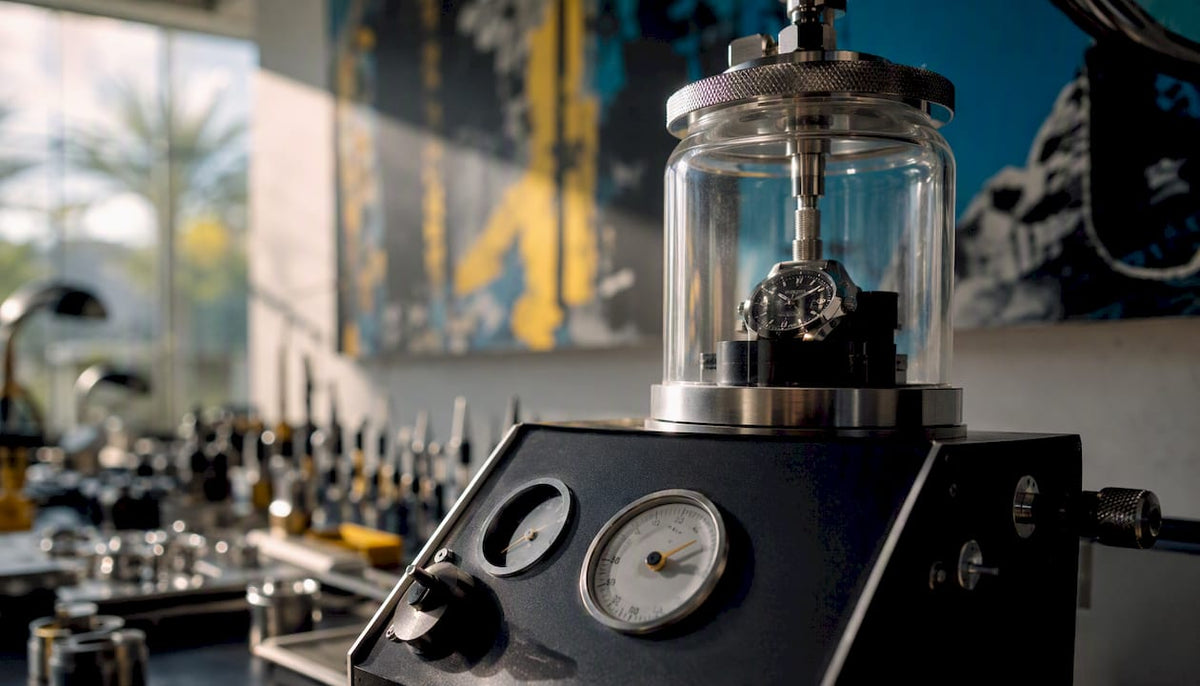
- Dry pressure test. The watch is placed in a sealed chamber and pressurized with air to the rated level. A pressure drop indicates a leak without exposing the movement to water.
- Wet-chamber test (when applicable). Some shops follow with a wet test, submerging the watch under pressure and checking for bubbles.
- Results and report. A reputable shop will tell you the pressure held, whether gaskets were replaced, and what rating the watch now reliably meets.
Reputable watchmakers replace gaskets and re-test after any case opening, not just when a leak is found. That is the standard you should expect.
**ISO 6425 vs. a standard shop pressure test confirms the seal holds at a given pressure. It does not confer ISO 6425 certification, which requires independent verification. ISO 6425-certified watches also undergo saltwater and condensation tests that go well beyond a basic pressure check. Helium escape valves, found on some professional dive watches, address a separate issue: helium ingress during saturation diving that can cause crystal failure on decompression.
Pro Tip: Ask for a written confirmation of the pressure test result, including the pressure level reached and whether gaskets were replaced. A shop that cannot provide this is not running a proper test.
What to do if water gets inside your watch
Act quickly. The longer water sits inside the case, the more corrosion damage accumulates.
Do these things immediately:
- Remove the watch from water.
- Dry the exterior gently with a soft cloth.
- Do not press any buttons or operate the crown.
- Take it to a watchmaker as soon as possible, ideally the same day.
- Remove the strap if it traps moisture against the caseback.
Do not do these things:
- Do not use a hair dryer or place the watch in direct sunlight to dry it. Heat accelerates corrosion inside the case.
- Do not open the case yourself. Exposing the movement to uncontrolled air introduces more moisture.
- Do not keep wearing the watch and hope it dries out. Running a wet movement accelerates wear and corrosion.
Signs water has already entered:
- Condensation or fogging under the crystal
- Sudden stoppage or erratic timekeeping
- A musty or metallic smell from the case
- Visible moisture on the dial or hands
Fogging under the crystal is the most common early sign and often appears after a hot shower or pool session. Do not ignore it.
Which water-resistance rating do you actually need?
Match the rating to what you do most, not to what sounds impressive.
- Desk worker or casual wearer: 30m–50m covers daily life. You will rarely need more unless you swim regularly.
- Regular swimmer: 100m minimum. Look for a screw-down crown and a reinforced caseback. 100m is the sensible minimum for routine swimming, and construction at this level is meaningfully better than at 50m.
- Snorkeler or watersports participant: 100m–200m. Watersports create dynamic pressure spikes, so more headroom helps.
- Recreational diver: 200m with ISO 6425 certification. A 200m rating without that certification is not a dive instrument.
Buying checklist:
- Confirm the ATM or meter rating on the spec sheet, not just the marketing copy.
- Check for a screw-down crown if you plan to swim regularly.
- Request ISO 6425 certification if you dive.
- Read the warranty terms carefully. Many manufacturers exclude water damage from coverage if the watch was not serviced on schedule. The lifetime warranty guide explains what to verify before you buy.
- Budget for a pressure test every 1–2 years as part of ownership cost.
For smartwatch owners who want extra protection near water, a screen protector guide covers the options worth considering.
A practical note from Wynwoodblvd on everyday water resistance
Wynwoodblvd designs watches for people who live near the water, travel to it, or simply want a watch that keeps up with a coastal lifestyle without demanding constant caution. That means being straightforward about what our watches can and cannot do.
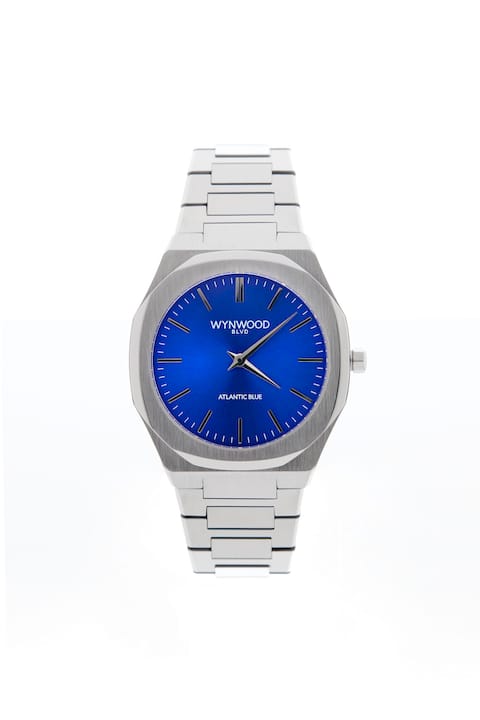
Every Wynwoodblvd watch uses a stainless steel case and is built with water resistance suited to everyday coastal wear. We are clear about the rating each model carries, and we recommend the same care steps this guide covers: rinse after salt or pool exposure, keep the crown secured, skip the hot shower, and get a pressure test if you use the watch in water regularly.
We do not overstate ratings or use “waterproof” language. What we do is build watches that hold up to real coastal use when cared for correctly, and we back that with honest guidance on maintenance and service.
Wynwoodblvd watches built for coastal everyday wear
If you want a watch that fits a water-adjacent lifestyle without overthinking it, the Atlantic Blue automatic watch is built on a stainless steel case with a sealed crown and water resistance suited to everyday coastal use. The Everglades Green and Sunset Orange models follow the same construction standard.

All three are automatic stainless steel watches designed with Miami coastal living in mind. Each product page lists the specific water-resistance rating, recommended activities, and care instructions so you know exactly what you are buying. Browse the full watch collection to compare models, or reach out directly if you have questions about water-resistance ratings or post-purchase service options.
Sources
- Watch Water Resistance Guide: What 30M, 100M & 200M Actually Mean | Watch Direct
- What is ATM water resistance? 3 ATM, 5 ATM and more explained
- Watch Water Resistance Checker | Watch The Watch
- Water Resistant mark