Shoppers: Use the 1.5x Bail Rule to Pick Chain Types That Fit
Chain construction and width decide function more than name recognition does: solid link builds like rope, Franco, curb, and Cuban rank strongest and repair best, while flat styles like herringbone and snake work only as standalone statement pieces. Cable and box chains carry pendants reliably at thin widths, curb and Cuban read as bold everyday or statement pieces, and stainless steel options give you that durability without the upkeep of plated metal.
TL;DR:
- Solid, tightly woven chains like rope, Franco, and curb are the most durable for daily wear and handle water exposure better than hollow alternatives.
- Chain strength depends more on construction and material quality than style name, with solid links outperforming hollow ones at the same width.
- Stainless steel chains offer water resistance and low maintenance, making them ideal for constant use, especially in salt or chlorine environments.
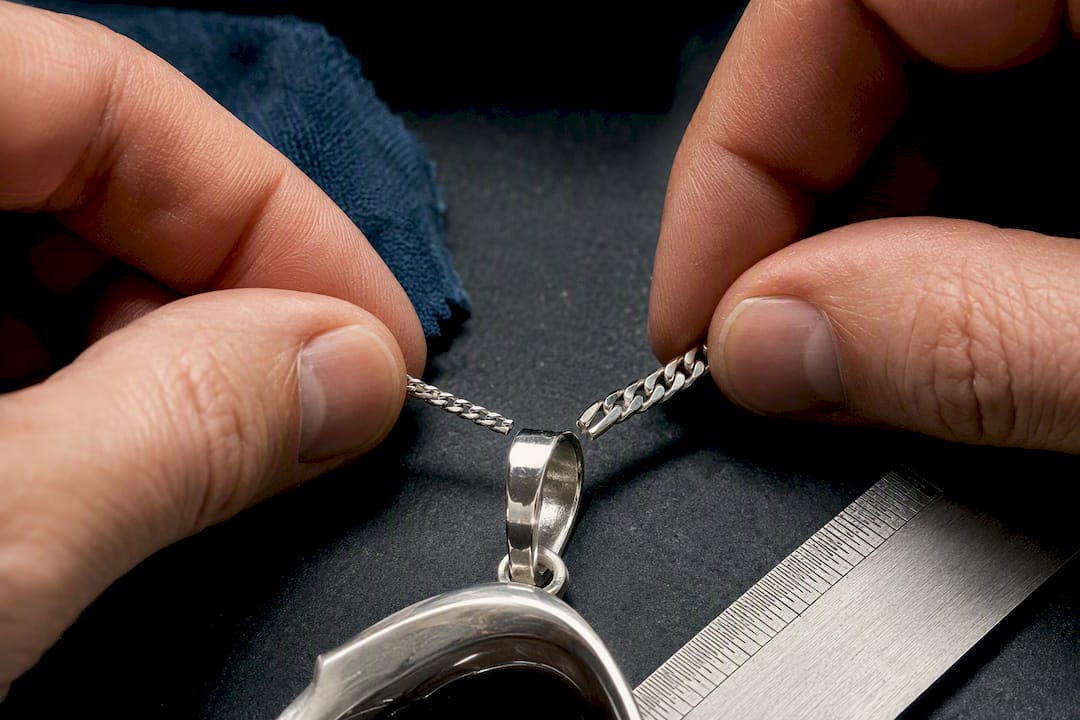
- For pendant compatibility, select a chain at least 1.5 times thicker than the pendant’s bail opening and test for smooth, easy slip.
- Flat styles like herringbone and snake are best reserved for bare-neck wear, as they are prone to kinks and damage when used with sliding pendants.
Table of Contents
- Chain Types Explained: A Shopper’s Catalog by Use
- How to Choose the Right Chain for Your Pendant or Look
- Materials and Construction: What Actually Determines Strength
- Care, Repair, and Storage That Actually Extend Chain Life
- Where Wynwoodblvd Fits Into the Chain Conversation
- Where These Chain Styles Actually Came From
- Choosing Chain Length for Different Looks and Neck Sizes
- What Chains Typically Cost by Type
- Metal Sensitivities and Allergies to Know Before You Buy
- Weight and Comfort in Everyday Wear
- What the Chain Aisle Gets Wrong
- Practical Chain Picks From Wynwoodblvd
- Sources
- FAQ
Chain Types Explained: A Shopper’s Catalog by Use
Every chain does one of three jobs: it carries a pendant, it works alone as the jewelry, or it splits the difference for dressy occasions. Sorting by that job, rather than by name alone, is the fastest way to shop.
Workhorse chains (built to carry a pendant):
- Cable chain. Simple oval links, twisted so each one sits at a right angle to the last. Typical widths run 1mm to 3mm. It is the default pendant chain because it is thin, strong for its size, and inexpensive to produce. Repairs are easy since a jeweler can solder a single link without disturbing the rest.
- Box chain. Square links that lock into a tight, almost seamless line. Box chains commonly sell in widths suitable for pendants and offer strength relative to their thin profile (https://www.continentalbeadsuppliers.com/blogs/blog/the-different-types-of-jewelry-chains), which makes them a dependable pendant carrier when the links are soldered rather than welded shut. Style tip: a box chain at 2mm disappears under a collar, letting a pendant do all the talking.
- Rolo (Belcher) chain. Round, uniform links that give a slightly beaded look. Rolo chains handle pendant weight well and are a common choice for lockets, since the rounded profile resists the kind of pinching that damages flatter links.
Everyday chains (comfortable enough to wear daily, strong enough to stand alone):
- Rope chain. Tightly wound links that mimic twisted cord. Rope chains are flexible and tolerate broken links better than heavier Cuban styles, and they move naturally with the body instead of sitting stiffly. Widths from 2mm to 6mm suit daily wear; anything thicker starts to feel like a statement piece.
- Curb chain. Flattened, interlocking links that lie flat against the skin. Curb is the base construction; Cuban is a heavier, wider variant, so a 3mm curb reads as a casual layering piece while an 8mm version of the same link starts to look substantial.
- Wheat (spiga) chain. Multiple strands twisted together in a braid-like pattern that catches light from every angle. It is durable and comfortable, though the intricate weave makes DIY repair difficult. This one usually goes to a jeweler if it breaks.
Statement chains (the chain is the jewelry):
- Cuban link. Thick, flattened, interlocking links with heavy metal weight per inch. Cuban chains photograph as strong statement pieces but can feel less comfortable for all-day wear once you get past 6mm, since the added weight rests noticeably on the collarbone.
- Franco chain. A tightly braided, ropelike pattern with a distinct twisted texture, often mistaken for rope at a glance. Franco ranks among the sturdiest constructions available, which is why it shows up often in heavier men’s pieces.
- Mariner (anchor) chain. Oval links with a bar running through the center, echoing a ship’s anchor chain. It has genuine visual presence and works well solo, though the bar detail makes it a poor match for most pendant bails.
- Paperclip chain. Elongated, flattened oval links that resemble office paperclips stretched into jewelry. It is trend-driven and reads modern, but the wide-open link gaps make it more prone to snagging on clothing than tighter constructions.
Flat and occasion chains (best left bare):
- Herringbone chain. Flat, tightly packed links that create a smooth, almost fabric-like ribbon of metal. Herringbone widths often start around moderate sizes and can kink permanently if bent sharply, so this style should be treated as an occasion piece rather than something tossed in a bag daily.
- Snake chain. A smooth, scaled tube that looks almost liquid against the skin. It shares herringbone’s Achilles’ heel: once it kinks, that bend usually stays.
- Figaro chain. A curb variant with a repeating pattern, one long link followed by two or three short ones. Figaro commonly runs moderate widths and works well as a standalone textured chain, splitting the difference between a workhorse and a statement piece.
- Bead (ball) chain. Small spheres linked in a row, familiar from military dog tags. It is inexpensive and casual, best suited to lightweight charms rather than heavier pendants.
Avoid pairing herringbone or snake chains with a pendant unless the pendant has a fixed, non-sliding bail. Both styles are flat and smooth by design, and a sliding pendant will scuff the finish and eventually create a kink right at the bail’s resting point.
How to Choose the Right Chain for Your Pendant or Look
Shopping for a chain gets simple once you work through it in order, rather than picking by whatever looks good on a display card.
- Define the chain’s job first. Is it carrying a pendant, or is the chain itself the jewelry? A pendant chain needs a bail that fits and a construction that won’t twist under a hanging weight. A standalone statement chain needs enough width and visual weight to hold its own bare.
- Check construction and clasp quality. Solid links outperform hollow ones in every durability test that matters, and a lobster clasp or spring ring should feel proportionate to the chain’s weight. A heavy chain hung on an undersized clasp is one of the most common failure points jewelers see in repair, right alongside worn-out spring mechanisms.
- Confirm bail fit before you buy. A workable rule of thumb: choose a chain at least 1.5 times thicker than the pendant’s bail opening, or physically test that the chain slides through smoothly without forcing it. A 2mm cable chain works fine with a small charm; a heavier statement pendant needs a 3mm or 4mm curb or box chain to avoid a sloppy, sliding fit.
- Pick width and length together. A 1.5mm chain reads delicate and disappears under clothing, which suits layering. A 4mm to 6mm chain becomes the visual anchor of an outfit. Length changes the read too: an 18 inch chain sits at the collarbone for a classic look, while a 22 to 24 inch chain drops lower for a more relaxed, statement feel.
- Weigh material against maintenance tolerance. If you want zero upkeep, stainless steel resists tarnish in a way plated gold and sterling silver cannot match. If you want maximum shine for a special occasion, a diamond-cut finish adds sparkle at a small durability cost.
- Set your budget last, not first. Chain price scales with metal weight and construction complexity far more than with brand name, so decide on construction and width before comparing price tags across similar-looking pieces.
Working through these steps in order keeps you from falling in love with a chain that will not actually work with the pendant you already own.
Materials and Construction: What Actually Determines Strength
Solid links are simply stronger than hollow ones of the same width, because there is more metal resisting the pull at every point of stress. Hollow chains cost less and weigh less on the neck, but they also dent and collapse under pressure that a solid chain shrugs off entirely.
Metal choice changes the durability equation too:
- Stainless steel resists corrosion and holds its shape through daily wear, and 316 grade steel is repeatedly recommended for waterproof, low-maintenance everyday jewelry because it does not tarnish the way silver does.
- 925 sterling silver looks bright and formal but tarnishes with exposure to air and moisture, requiring regular polishing to stay presentable.
- Plated gold offers the gold look at a lower price point, but the plating wears through with friction over months of daily contact, especially at clasp points.
- Solid gold holds color permanently and never tarnishes, at a price point far above the alternatives.
By construction, rope, Franco, and curb-family chains including Cuban rank among the strongest builds because of their tightly woven or interlocking link geometry, with box chains close behind for their strength relative to how thin they look.
Pro Tip: If you want one chain that handles gym workouts, showers, and daily wear without babying it, choose solid stainless steel in a box or curb construction. You give up a small amount of shine compared to polished gold, but you gain a chain that never needs to come off.
Care, Repair, and Storage That Actually Extend Chain Life
- Rinse chains after sweat, pool water, or salt water exposure, and avoid spraying perfume or hairspray directly onto them since chemicals dull most metal finishes over time.
- Store chains flat or hanging separately rather than tossed together in a drawer, since links tangle and rub against each other, causing surface scratches.
- If a chain kinks, try gently working it straight with your fingers immediately. Herringbone and snake chains often kink permanently once bent sharply, so treat any bend in those styles as urgent.
- See a jeweler for a broken link, a bent clasp, or a snapped solder joint. Soldering a single link back together is a routine, inexpensive repair; forcing a broken chain closed yourself usually makes the eventual professional fix more expensive.
Where Wynwoodblvd Fits Into the Chain Conversation
This guide comes from Mathias, drawing on how Wynwoodblvd designs and sources its own jewelry. The brand builds pendants and charms in stainless steel specifically because it resists salt air, pool chlorine, and daily sweat without the tarnish problems that plague silver and plated gold. If you followed the bail-fit and construction rules above, a Wynwoodblvd palm tree charm paired with a solid steel curb or box chain checks every box: strength, water resistance, and a design that actually holds up.
Where These Chain Styles Actually Came From
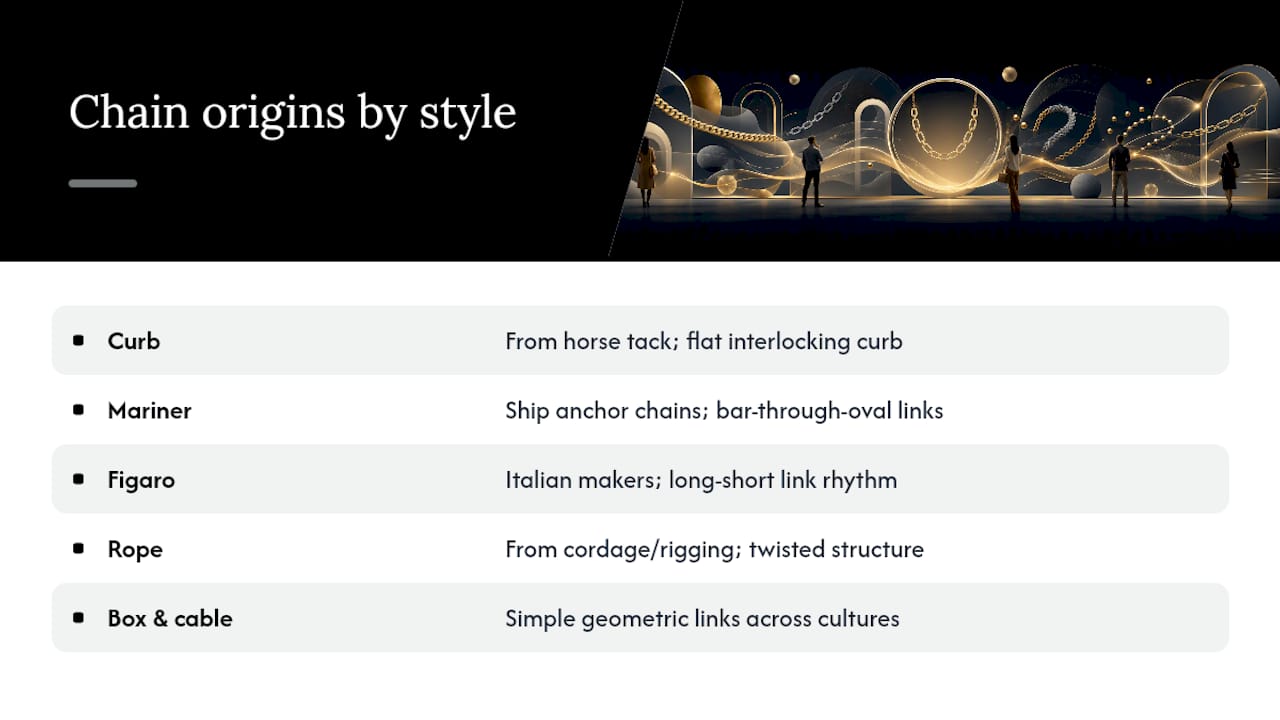
Chain making is one of the oldest metalworking crafts, and several styles carry names that point straight back to their origin. The curb chain gets its name from horse tack, where a flat, interlocking curb chain sat under a horse’s chin to control bit pressure, a design that jewelers borrowed for its flatness and strength. The mariner chain takes its name and its bar-through-oval-link design directly from ship anchor chains, prized for withstanding constant tension at sea.
Figaro chains trace to Italian jewelry making of the early 20th century, where the repeating long-short link rhythm became associated with tailored menswear and later crossed into mainstream fashion. Rope chains borrow their twisted structure from actual cordage and rigging, a shape humans have made from fiber for thousands of years before goldsmiths began recreating it in metal.
Box chains and cable chains are harder to trace to a single origin since their simple geometric links appear across centuries of jewelry from multiple cultures independently. That simplicity is exactly why they became the default pendant chains: easy to produce consistently, easy to repair, and versatile enough to disappear under any pendant style. Knowing a chain’s backstory will not change how it wears, but it does explain why certain constructions became standard while others stayed niche.
Choosing Chain Length for Different Looks and Neck Sizes
Length changes how a chain reads far more than most shoppers expect. A 16 inch chain sits tight at the base of the throat, often called a collar length, and works best for smaller pendants or layering under a longer piece. An 18 inch chain lands right at the collarbone on most adults, which is the most versatile length for a single statement pendant since it clears necklines without disappearing into clothing.
A 20 to 22 inch chain drops just below the collarbone and suits larger pendants or bulkier statement chains like Cuban or Franco, giving heavier links room to hang naturally instead of sitting stiffly against the collar. A 24 inch chain or longer moves into layering territory or a deliberately relaxed, low-hanging look, which pairs well with thinner cable or rope chains rather than bulky statement builds.
Neck and torso proportions matter too. Someone with a shorter neck often finds 16 inch chains feel tight or visually crowded, while an 18 to 20 inch chain gives breathing room. For layering multiple chains, aim for at least a 2 inch gap between lengths so each piece stays visible instead of tangling into a single cluster. Wynwoodblvd’s pendant length guide breaks these proportions down further by body type if you want a more tailored starting point before you buy.
What Chains Typically Cost by Type
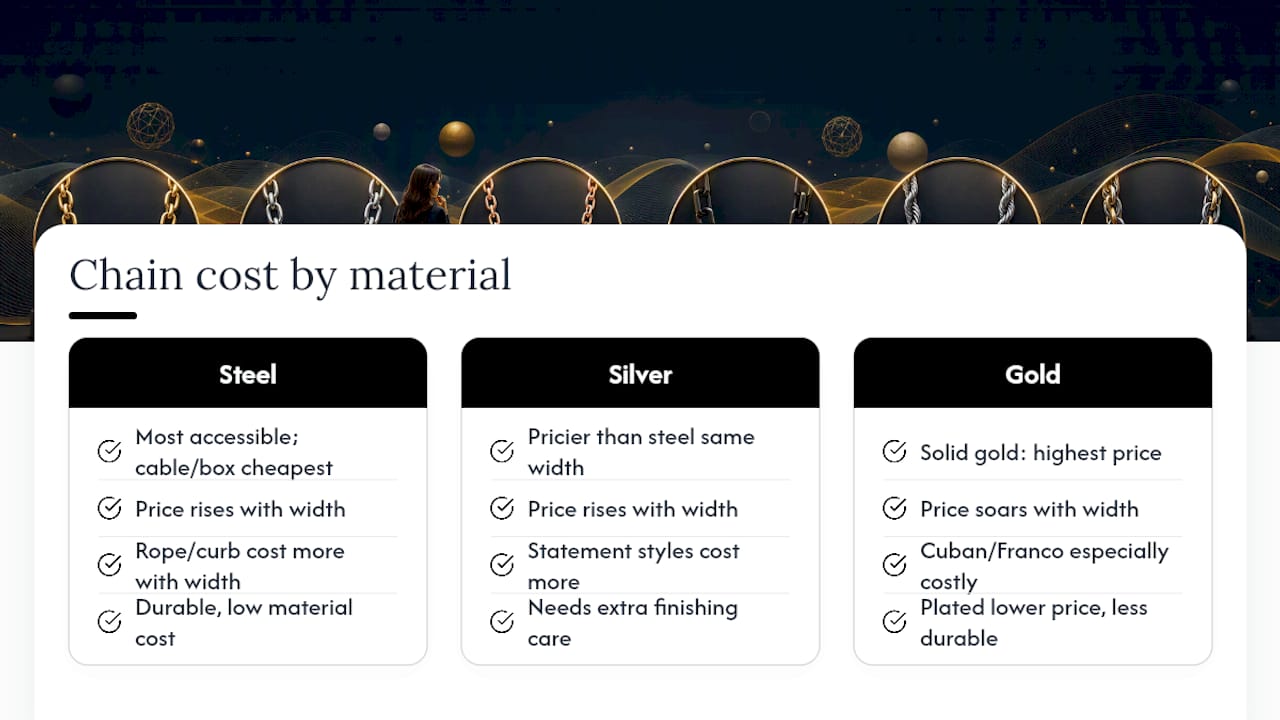
Price scales primarily with metal weight and construction complexity, not brand prestige. Thin cable and box chains in stainless steel sit at the most accessible end of the market, since they use less metal and require simpler manufacturing. Rope and curb chains in the same steel cost more as width increases, because a 6mm rope chain simply contains far more metal than a 2mm cable chain of the same length.
Sterling silver versions of any given style typically cost more than stainless steel equivalents at the same width, reflecting both material cost and the extra care required in finishing. Solid gold chains sit at the top of the price range by a wide margin, since gold’s raw material cost dwarfs steel or silver even before labor is factored in, and plated gold tries to bridge that gap but sacrifices long-term durability for a lower price point.
Statement pieces like Cuban and Franco chains cost more than everyday styles at a comparable width simply because their link geometry uses denser metal packing per inch. A thin 2mm chain in any material will almost always cost less than a thick 8mm chain in the same material, which is worth remembering before assuming a particular chain style is inherently expensive or affordable. Construction and width drive the number far more than the name on the tag.
Metal Sensitivities and Allergies to Know Before You Buy
Nickel allergy is the most common metal sensitivity affecting jewelry wearers, and it shows up as redness, itching, or a rash where metal sits against skin for extended periods. Cheaper plated chains and some lower-grade alloys use nickel in their base metal or plating layer, which is often the real culprit behind a chain that “turns your neck green” or causes irritation.
Solid stainless steel, particularly 316 grade, contains minimal free nickel and is widely tolerated even by people with documented metal sensitivities, which is part of why it has become a default choice for daily wear jewelry and permanent bracelets. Sterling silver at 925 purity is also generally well tolerated, though the copper alloy mixed into sterling can occasionally cause reactions in copper-sensitive individuals. Solid gold, particularly at 14 karat or higher, rarely causes reactions since higher gold content means less alloy metal touching skin.
If you have had a reaction to costume jewelry before, look specifically for solid stainless steel or higher-karat solid gold rather than assuming all metal chains carry the same risk. Reading the material listing before checkout matters more than the chain’s style or price point when allergy history is a factor.
Weight and Comfort in Everyday Wear
A chain’s width and construction determine how it feels by the end of a long day, not just how it looks in a mirror. Thin cable, box, and rolo chains under 3mm sit lightly enough that most wearers forget they have them on, which is exactly why these styles dominate the pendant category. Heavier statement builds like Cuban, Franco, and wide curb chains add real weight, sometimes enough to feel it pressing on the collarbone or shifting noticeably during activity.
Flat chains like herringbone and snake distribute weight evenly across a wide surface, which can actually feel more comfortable than a narrower chain of equal weight since the pressure spreads out. Rope chains strike a middle ground: they carry noticeable weight at wider gauges but move with the body instead of sitting rigid, which reduces the fatigue some wearers feel from stiffer constructions like mariner or paperclip.
If you wear a chain constantly rather than for occasional dress up, comfort should outweigh appearance in the decision. A 4mm rope or curb chain in stainless steel gives you presence without the neck fatigue that a similarly sized Cuban chain can cause after several hours, particularly for smaller frames or during physical activity.
What the Chain Aisle Gets Wrong
Most buying guides rank chains by name recognition, treating “Cuban” or “rope” as a quality signal on its own. That misses the actual variable that determines whether a chain survives daily wear: whether the links are solid or hollow. A hollow Cuban chain at 6mm can be weaker than a solid rope chain at half the width, yet it often costs more because hollow links let manufacturers use less metal while charging for visual size.
The other blind spot is treating flat chains like herringbone and snake as versatile pendant options because they look elegant on a mannequin. They are not built for hanging weight, and the industry rarely says so plainly. If you take one thing from this guide, let it be this: ask about solid versus hollow construction before you ask about style name, and reserve flat chains for bare-neck wear only. Everything else, including material choice and length, is a matter of taste once that durability question is settled.
— Mathias
Practical Chain Picks From Wynwoodblvd
Once you have settled on construction and width using the checklist above, the actual shopping gets simple. This guide emphasizes jewelry built from solid stainless steel that resists salt water, sweat, and daily wear without the tarnish problems that come with silver or plated gold.

For a pendant, the Palm Tree Charm in Silver Signature Painted and the Gold Classic version both work well on a solid box or curb chain sized to the 1.5x bail rule covered earlier, and the Gold Signature Painted charm offers a bolder finish for a statement pendant look. Browse the full necklace collection to match chain width to whichever charm catches your eye. If you are building out a complete look rather than a single piece, the Atlantic Blue Automatic Watch, the Keys Blue Miami Inspired Watch, and the Sunset Orange Miami Inspired Watch share the same stainless steel construction, so metal tones match across your pendant, chain, and wrist. Check the necklace collection page for current sizing and pick the pendant that fits the chain you have already chosen.
Sources
- Types of Necklace Chains: Every Link Style Explained | Opulent Opal
- Cuban Link vs Rope Chain: Which Wins in 2026? | DRIPLORE
- Types of Jewelry Chains: 26 Styles With Photos
FAQ
What chain style is strongest?
Rope, Franco, and curb-family chains including Cuban rank among the strongest constructions because of their tightly woven or interlocking link geometry, with solid box chains close behind for their strength relative to width. Solid links always outperform hollow links of the same style and width.
How do I know if my chain is 520 or 525?
Those numbers refer to bicycle chain pitch and roller width standards, not necklace chains. For jewelry chains, width and link construction are measured in millimeters instead.
How do you tell what type of chain you have?
Look closely at the individual links: interlocking flat links point to curb or Cuban, tightly wound cord-like links point to rope, and a smooth continuous tube points to snake. If the chain feels loose and slides freely, it is likely hollow rather than solid.
How do I choose the right chain type?
Start by defining the chain’s job, pendant carrier or standalone piece, then check for solid construction and a clasp proportioned to the chain’s weight. Confirm bail fit using the 1.5 times width rule, and pick material based on how much maintenance you are willing to do.