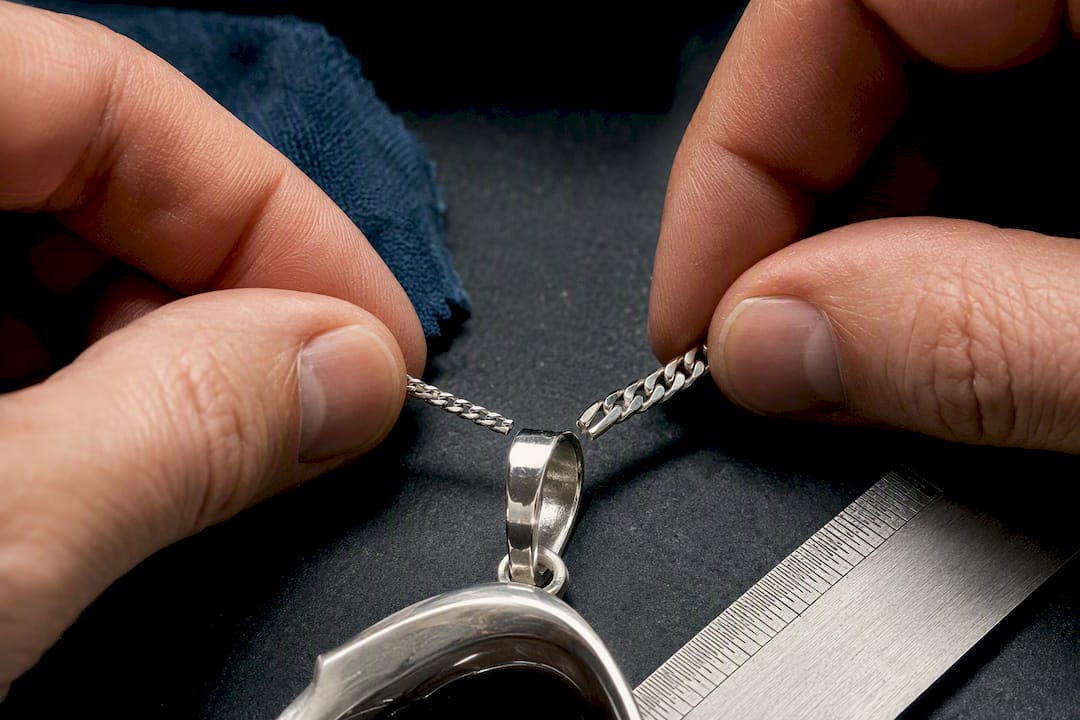
Rinse in 20–30 Minutes: WYNWOOD BLVD's Ocean Safe Jewelry (316L, PVD)
The safest bets are 316L stainless steel, titanium, and quality PVD-coated steel; solid gold works too if you’re diligent. Rinse whatever you wear in fresh water soon after leaving the water, before salt has a chance to crystallize on the metal. “Mathias and the team at a Miami-inspired lifestyle brand build pieces around this exact rule, and a Zevira beach care guide backs the same timeline.”
TL;DR:
- Metals like 316L stainless steel, titanium, and PVD-coated steel resist saltwater corrosion and are suitable for frequent ocean exposure.
- Rinsing jewelry with fresh water within 20 to 30 minutes after leaving the water prevents most salt crystallization damage.
- Solid, single-piece construction, avoiding small or fiddly parts, significantly reduces failure risks during active water use.
- Gold and silver can tolerate ocean contact if promptly rinsed, but plated or lower-karat metals are more vulnerable to rapid deterioration.
- Avoid pearls, leather, plated jewelry, and delicate settings, as these materials and designs fail quickly in saltwater environments.
Table of Contents
- What Materials Actually Survive Saltwater?
- What Design Features Hold Up Best in the Surf?
- What Should You Never Wear Into the Ocean?
- How Do You Stop Salt Damage After a Swim?
- Why WYNWOOD BLVD Builds With Ocean Use in Mind
- A Quick Buying Checklist by Activity
- [Ocean-ready picks from a Miami-inspired lifestyle brand align with the material rules covered above: solid stainless steel, minimal weak points, finishes that hold up past the first season, perfect complements to beach-style hair extensions for a complete summer look. Three pieces fit ocean use particularly well right now.](#ocean-ready-picks-from-a-miami-inspired-lifestyle-brand-align-with-the-material-rules-covered-above-solid-stainless-steel-minimal-weak-points-finishes-that-hold-up-past-the-first-season-perfect-complements-to-beach-style-hair-extensions-for-a-complete-summer-lookhttpsbella-lucomproductsbeach-blonde-clip-in-three-pieces-fit-ocean-use-particularly-well-right-now)
- Sources
- FAQ
What Materials Actually Survive Saltwater?
Not every metal marketed as “waterproof” holds up once it meets the ocean. Material science determines the outcome, not the label on the tag, and the Wirecutter guide to summer jewelry care puts it plainly: no jewelry is truly summer-proof, but some materials come close.
316L stainless steel is the workhorse here. The “L” stands for low carbon, and the chromium in the alloy forms a thin oxide layer on the surface called a passive film. That film self-repairs when scratched, which is why 316L resists rust and pitting even after repeated dunks. The added molybdenum gives it extra resistance to chloride, the exact ion that makes seawater so corrosive to lesser metals.
Titanium performs just as well, sometimes better. It’s biocompatible, which is why piercers favor it for fresh piercings that need saltwater exposure without irritation. It’s also lighter than steel, though usually pricier.
PVD coatings (physical vapor deposition) bond a thin metal layer directly to the steel base at a molecular level. A well-applied PVD finish on 316L holds color and shine far longer than traditional electroplating, according to Sea Salt and Jewellery: Beach Care 2026. It’s a different process than dipping a piece in a thin electroplate layer, and that difference shows up fast in the water.
Solid gold and sterling silver can go in the ocean, but they demand more attention. Gold won’t corrode, but lower karats mixed with copper can discolor over time with salt exposure. Silver tarnishes faster in humid, salty air even when it’s dry.
Here’s where things go wrong fast:
- Gold-plated or silver-plated base metal wears through in a matter of ocean swims, exposing the metal underneath.
- Leather cords absorb salt and stretch, crack, or rot with repeated soaking.
- Costume jewelry with mixed-metal alloys often reacts visibly, turning green or dull within days.
What Design Features Hold Up Best in the Surf?
Material only solves half the problem. A piece can be made of perfect steel and still fail if the design has weak points built into it.
- Choose solid, one-piece construction. Pendants and bracelets cast or cut from a single piece of metal have nowhere for salt to hide and nothing to snag on rocks or sand.
- Skip thin chains and small jump rings. These are the first parts to wear thin, kink, or snap during actual movement in the water, not just standing in the shallows.
- Avoid spring-ring clasps for active use. They’re small, fiddly, and the first thing to fail when you’re swimming, surfing, or pulling off a wetsuit.
- Stick to hard gemstones if you’re wearing stones at all. Diamond, sapphire, and ruby resist both chemical exposure and mechanical wear far better than softer, more porous stones.
- Check for closed-back settings. Open settings trap salt and sand against the stone; closed-back settings seal it out.
Pro Tip: Run your finger along any solder points or seams before buying. If you feel a ridge or rough spot, that’s a future weak point once saltwater gets into it.
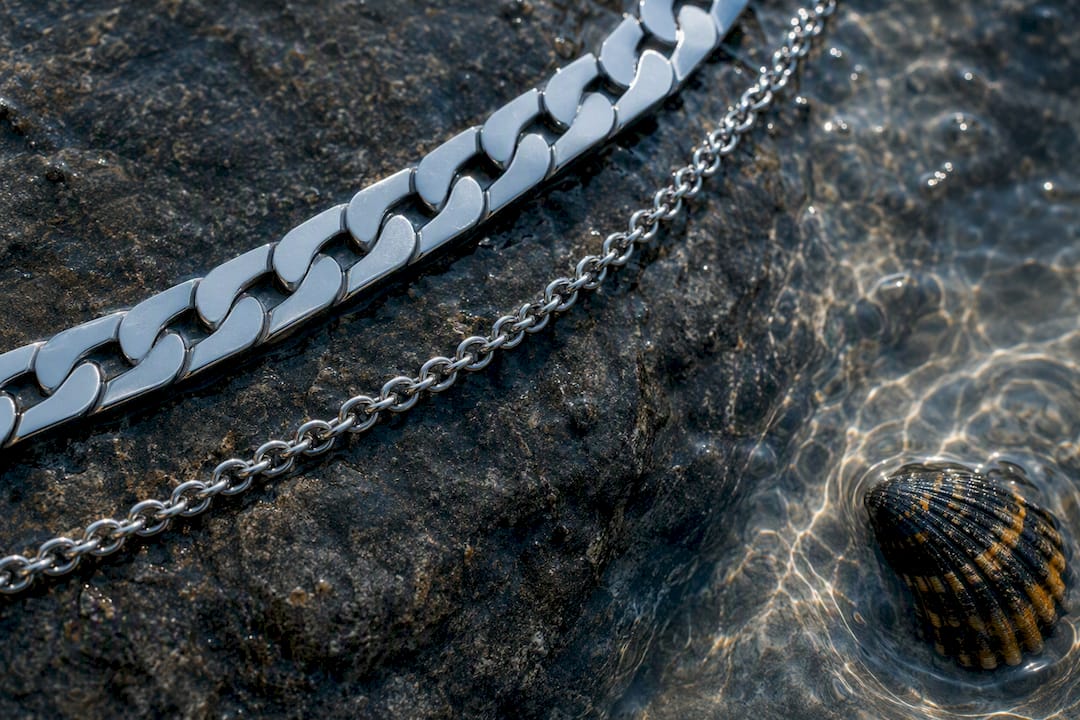
Wide, flat links also outperform delicate cable chains for one simple reason: more surface area means slower wear per exposure.
What Should You Never Wear Into the Ocean?
Some materials aren’t worth the risk, no matter how they’re marketed.
- Pearls are calcium carbonate, and salt water pulls moisture from the nacre layers that give pearls their shine. Combine that with sunscreen chemicals and the surface degrades within a handful of wears.
- Leather cracks and warps as salt crystallizes inside the fibers, then dries stiff and brittle.
- Plated fashion jewelry looks identical to solid metal on day one. After a few ocean sessions, the thin layer abrades and the base metal underneath shows through, often as a greenish tint.
- Delicate prong settings and fresh piercings carry real risk in moving water. A prong can catch on a wetsuit zipper; a fresh piercing exposed to bacteria-laden seawater can get irritated or infected before it’s fully healed.
Editorial roundups love phrases like “never take it off” or “lifetime color guarantee.” Treat those as marketing, not material specifications, and check construction yourself.
How Do You Stop Salt Damage After a Swim?
Saltwater does most of its damage after you leave the water, not while you’re in it. Salt doesn’t harm metal while it’s dissolved in seawater. The real damage starts once you’re out and the water evaporates, leaving crystallized salt sitting directly on the metal surface.
Here’s the routine that actually works:
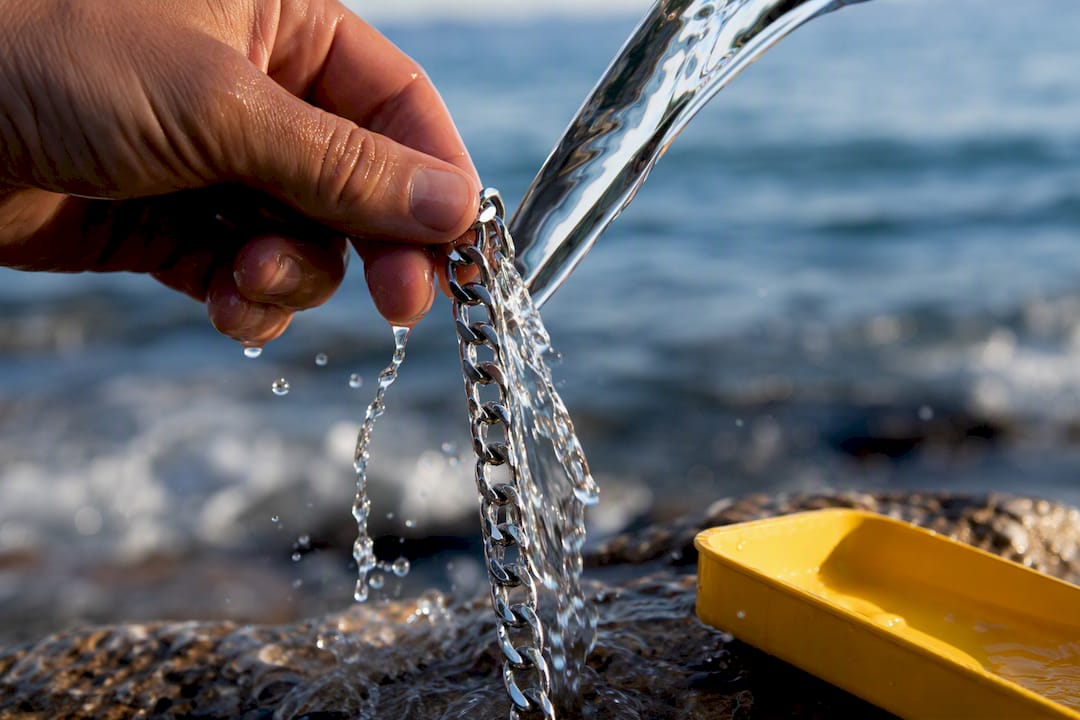
- Rinse in fresh water within 20 to 30 minutes of leaving the ocean. This single step prevents almost all salt crystallization damage, according to Zevira’s beach care research.
- Dry immediately with a soft cloth, paying attention to clasps, hinges, and any joints where water pools.
- Use mild soap and a soft brush for grooves, textured surfaces, or closed-back settings where sand and salt collect.
- Store in a soft pouch, not a humid bathroom drawer, and give pieces a quick visual check every few weeks for early wear on clasps or links.
Skip that rinse window and you’re relying on the next shower to do the job, by which point salt has already had time to sit and crystallize.
Why WYNWOOD BLVD Builds With Ocean Use in Mind
Mathias and the WYNWOOD BLVD design team work almost exclusively in 316L stainless steel and PVD finishes for a reason: they’re the two materials that consistently hold up to Miami’s saltwater, humidity, and sun without the maintenance headache of gold or silver.
That preference isn’t arbitrary. It comes from watching plated and mixed-metal pieces fail within a season of real beach use, while properly finished stainless steel keeps its color and shine for years.
- Solid, minimal designs reduce failure points during swimming and diving.
- PVD finishes get chosen over standard electroplating for color longevity.
- Deeper material breakdowns live on the brand’s stainless steel jewelry for the ocean guide and the 316 stainless beach jewelry case study.
— Mathias
A Quick Buying Checklist by Activity
Match the piece to how hard you’re actually going to use it. For a casual beach stroll, PVD-coated steel gets you the look without the cost of solid metal. For swimming, surfing, or snorkeling, go solid 316L or titanium with minimal moving parts. Fresh piercings call for titanium specifically. Curious how these tradeoffs play out across necklace styles? The brand’s waterproof anti-tarnish jewelry comparison breaks it down further.
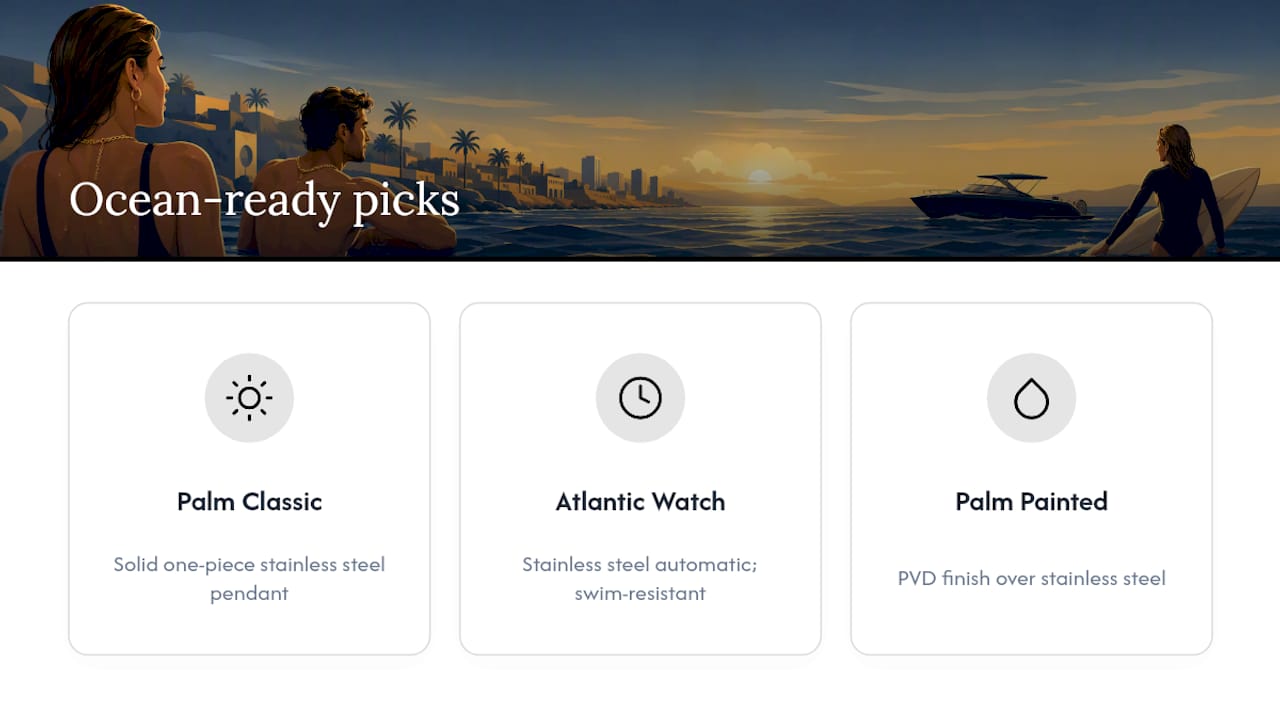
Ocean-ready picks from a Miami-inspired lifestyle brand align with the material rules covered above: solid stainless steel, minimal weak points, finishes that hold up past the first season, perfect complements to beach-style hair extensions for a complete summer look. Three pieces fit ocean use particularly well right now.
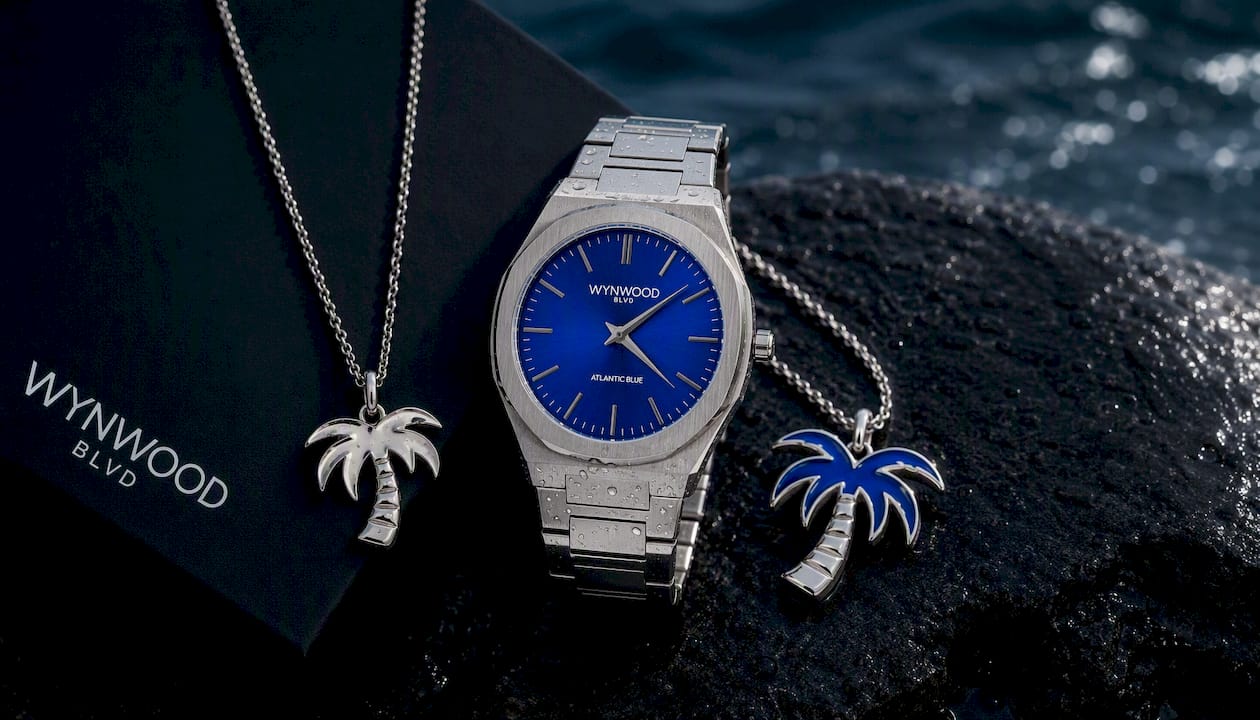
The Palm Tree Charm in Silver Classic is a stainless steel minimal pendant with a solid, one-piece build and no fussy clasps to fail mid-swim. It’s the pick for someone who wants a simple everyday piece that survives daily ocean exposure without a second thought.
If you’re after a watch you don’t have to take off before paddling out, the Atlantic Blue Stainless Steel Automatic Watch pairs a Miami-inspired dial with stainless steel construction resistant to water exposure, making it a solid match for beach days that turn into swims.
For a more decorative option, the Palm Tree Charm in Silver Signature Painted uses a PVD-applied finish over stainless steel, giving you color and detail without the fragility of standard plating.
All three pair well together, and all three benefit from the same 20 to 30 minute rinse rule covered earlier. Check the product pages directly for current sizing and any return details before you order.
Sources
The Zevira beach care guide verifies material resistance and rinse timing. Wirecutter’s summer jewelry guide confirms plated jewelry’s vulnerability. American Surf Magazine illustrates common beach jewelry marketing claims worth double-checking.
- How to Take Care of Your Jewelry Amid Heat, Sweat, and Other Summer Nemeses | Reviews by Wirecutter
- Sea Salt and Jewellery: Beach Care 2026 | Zevira
FAQ
What jewelry will not tarnish in salt water?
316L stainless steel, titanium, and solid gold are the most reliable options; properly applied PVD-coated steel also holds up well against tarnishing.
Can I wear my 14k gold chain in the ocean?
Yes, but rinse it in fresh water within 20 to 30 minutes afterward, since gold mixed with copper alloys can discolor with repeated, unrinsed salt exposure.
Is there any ocean-proof gold jewelry available?
No gold jewelry is fully ocean-proof, but solid gold pieces with simple, one-piece construction and prompt rinsing hold up far better than plated gold, which wears through quickly.
What type of jewelry is best for wearing at the beach?
Solid, one-piece designs in 316L stainless steel or titanium are best for active water use; casual beachwear can also work well in PVD-coated steel like WYNWOOD BLVD’s Silver Signature Painted charm.