Saltwater Watch Care: A Designer’s Rinse in 20 to 30 Seconds
After saltwater exposure, rinse your watch under fresh water, dry it with a soft cloth, and don’t operate the crown or pushers until the watch is fully dry. This routine follows manufacturer care guidance, and it’s the same habit we recommend at WYNWOOD BLVD for anyone who wears a stainless steel watch in the ocean.
TL;DR:
- For steel bracelets with salt, sunscreen, or grit buildup, brush between links and under the bezel with weak neutral detergent, shielding case seams with plastic.
- Leather bands should never be submerged; wipe them with a damp cloth and air dry away from heat, or choose rubber for frequent ocean swims.
- Water resistance can decline as gaskets age, so have them checked every two to three years and use authorized service after battery changes or impacts.
- Persistent fogging, droplets, muffled movement, or sound problems can signal moisture inside; stop wearing the watch and seek authorized service if symptoms remain.
Table of Contents
- What to do first when you get out of the water
- Band-specific care for steel, rubber, and leather
- How crowns, seals, and service keep your watch water resistant
- When a rinse isn’t enough: cleaning salt, sunscreen, and grit
- If moisture gets inside the case: what to check and do
- A simple seasonal care routine
- A designer’s note on keeping ocean watches in good shape
- Ocean-ready watches built for this routine
- FAQ
- Sources
What to do first when you get out of the water
Salt starts working on metal and seals the moment it dries on your watch. The fix is simple if you act fast.
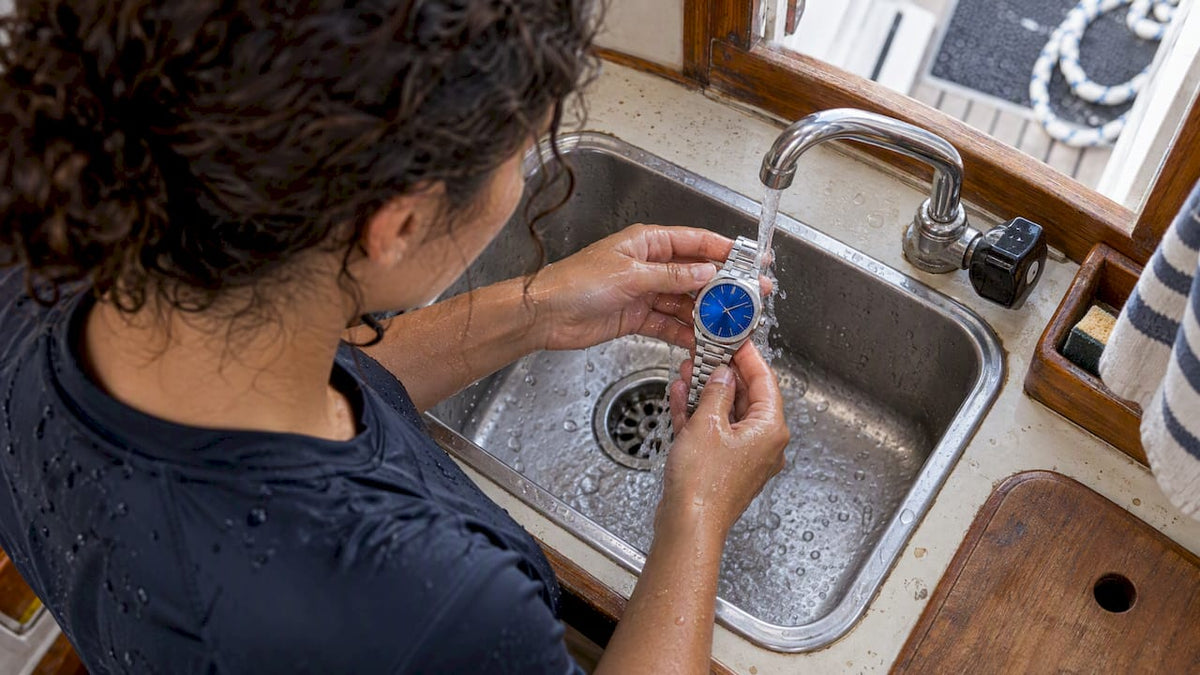
Rinse your watch under lightly running fresh water. If your watch has a rotating bezel, turn it gently under the stream to flush out any trapped salt. This habit, backed by manufacturer care guidance, helps rinse away salt before it settles into gaskets or seams.
Avoid these during rinsing and drying:
- Hot water, which can stress seals and gaskets.
- Compressed air, which can force moisture deeper into the case.
- Heat sources like hair dryers or direct sun for fast drying.
- Spray cleaners or soaps on the case unless you’re doing a deeper clean (more on that below).
Pat the watch dry with a lint-free cloth, then set it in a shaded, ventilated spot so any remaining moisture can evaporate naturally. Don’t touch the crown or pushers until you’re sure the watch is completely dry. Operating them while wet can let water past the seals, which is exactly what you rinsed the watch to avoid.
Pro Tip: Keep a small microfiber cloth in your beach bag. A rinse without a proper dry just moves the moisture problem to later.
Band-specific care for steel, rubber, and leather
Not every strap handles saltwater the same way, so the cleaning method should match the material.
- 316L stainless steel: Use a soft toothbrush with a weak neutral detergent to work salt out from between links, following the same approach manufacturer care guidance recommends, then rinse thoroughly and dry completely. If you’re using detergent near the case, wrap the case itself in plastic first to keep soap away from the crown seal.
- Rubber or resin: A quick rinse and wipe usually handles salt residue. For sunscreen or grime, a mild soap works, but rinse well afterward so no residue stays on the strap.
- Leather and other non-waterproof bands: Never submerge these. Wipe with a slightly damp cloth and let them air dry away from direct heat. If you’re regularly in and out of the ocean, swapping to a rubber or stainless strap saves the leather band for days on dry land.
How crowns, seals, and service keep your watch water resistant
Water resistance depends on a handful of small parts doing their job every time you get in the water, and those parts need attention over the life of the watch.
- Always check that the crown and any pushers are pressed in fully closed before you go in the water.
- Never operate the crown or pushers while the watch is wet or submerged, a point manufacturer care guidance stresses directly.
- Water resistance isn’t permanent. It can diminish over time as gaskets age, as noted in Apple’s own guidance for Apple Watch owners.
- Gaskets should be inspected and replaced about every two to three years, per manufacturer care guidance.
- Battery replacements and any impacts to the case should go through authorized service, since opening the case incorrectly can compromise the seals that keep water out.
If you want more detail on what your watch’s rating actually allows you to do in the water, our guide on watch water resistance ratings breaks down the differences between 5ATM and 10ATM.
When a rinse isn’t enough: cleaning salt, sunscreen, and grit
A quick rinse handles loose salt, but salt combined with sunscreen and sand is a different problem. These three combine to accelerate corrosion and wear down gaskets when they get lodged between links or under the bezel, according to a practical watch care breakdown on cleaning dive watches after saltwater exposure. The same principle shows up in saltwater corrosion prevention for fishing tackle, where salt residue left on metal hardware speeds up pitting and rust over time.
For a safe at-home deep clean:
- Use a soft brush with a weak neutral detergent on the bracelet links and under the bezel.
- Wrap the case in plastic if detergent gets near the crown or case seams.
- Rinse thoroughly with fresh water and dry completely before wearing again.
Pro Tip: If buildup keeps coming back no matter how often you rinse, that’s usually a sign sunscreen residue has worked its way deep into the bracelet, not just sitting on the surface.
For stubborn buildup, a watchmaker can run an ultrasonic cleaning, and formulated watch cleaners are a specialist alternative to home brushing, as the same cleaning guide points out.
If moisture gets inside the case: what to check and do
Fogging on the inside of the crystal can indicate that moisture has gotten past the seals. Visible droplets under the crystal, a movement that sounds muffled, or speaker and sound issues on a smartwatch are all signs worth taking seriously.
- Dry the outside of the watch completely first.
- Place it in a ventilated, room-temperature spot, never near heat or compressed air.
- Skip charging a smartwatch or connected device until you’ve confirmed it’s dry.
- If fogging doesn’t clear or the watch isn’t performing normally, stop wearing it and seek authorized service.
Owners dealing with this exact situation often compare notes on forums, and community discussion around saltwater and pool exposure consistently lands on the same advice: rinse, dry gently, and skip the DIY fixes that risk pushing moisture further in. If the problem persists, get the watch to an authorized service center before wearing it again.
A simple seasonal care routine
You don’t need a complicated schedule, just consistency. Rinse and dry your watch after every swim or dive. If you’re in the ocean regularly, do a deeper clean at the end of the season to clear out anything a quick rinse missed.
Beyond that, follow manufacturer care guidance on periodic gasket checks, or have them checked sooner after a battery change or a hard knock. Regular checks of the bracelet, crown function, and residue buildup can help catch small issues before they require service.

A designer’s note on keeping ocean watches in good shape

I’ve spent enough time around stainless steel watches to know the difference between a watch that’s cared for and one that isn’t shows up fast near saltwater. The habit that matters most isn’t complicated: rinse it, dry it fully, and do an occasional deeper clean. That alone keeps finishes and seals in good shape far longer than most people expect.
At WYNWOOD BLVD, we build around stainless steel for exactly this reason, and we recommend a water-safe strap over leather if you’re in the ocean often. For more on why that material choice matters, our guide to 316L stainless steel and saltwater and watchmaker-backed care tips go deeper into the specifics.
— Mathias
Ocean-ready watches built for this routine
If you’re spending real time in the water, the watch on your wrist should be built with that in mind. Our Atlantic Blue Stainless Steel Automatic Watch and Everglades Green Miami Inspired Watch are both stainless steel watches, styled around Miami’s coastline and the Everglades.

Browse our full Miami Inspired Watches collection to find the dial and case style that fits your routine, whether that’s daily ocean swims or the occasional dive trip.
FAQ
How do you take moisture out of a watch?
Dry the outside with a lint-free cloth, then place the watch in a ventilated, room-temperature spot away from heat or compressed air. If fogging under the crystal persists, the moisture may be inside the case and the watch needs authorized service.
Can an Apple Watch survive salt water?
Apple Watch models can be rinsed under lightly running warm fresh water after swimming, according to Apple’s own support guidance. Water resistance isn’t permanent, some bands aren’t water resistant and shouldn’t be submerged, and compressed air or heat should never be used to dry it.
Can you use Dawn dish soap to clean a watch?
A weak neutral detergent, not a dish soap specifically, is what manufacturer care guidance recommends for cleaning metal bracelets with a soft toothbrush. Rinse thoroughly afterward and keep any detergent away from the crown and case seals.
Can you lubricate a watch?
Lubrication is a job for a watchmaker, not a home fix, since it involves opening the case and handling the movement directly. Attempting it yourself risks compromising the seals that keep water out, which is the opposite of what saltwater watch care is meant to protect.
Sources
- Precautions Module No. 5744 - Support - CASIO
- About Apple Watch water resistance - Apple Support
- [How Do I Clean A Dive Watch After Salt Water? – Heist Clean](https://www.heistclean.com/blogs/advice/how-do-i-clean-a-dive-watch-after-salt-water)